
Full 25-point door and opener safety check with every visit - springs, cables, rollers, tracks, and your LiftMaster or Chamberlain opener included
You get a price before we start. It does not change when the truck arrives.
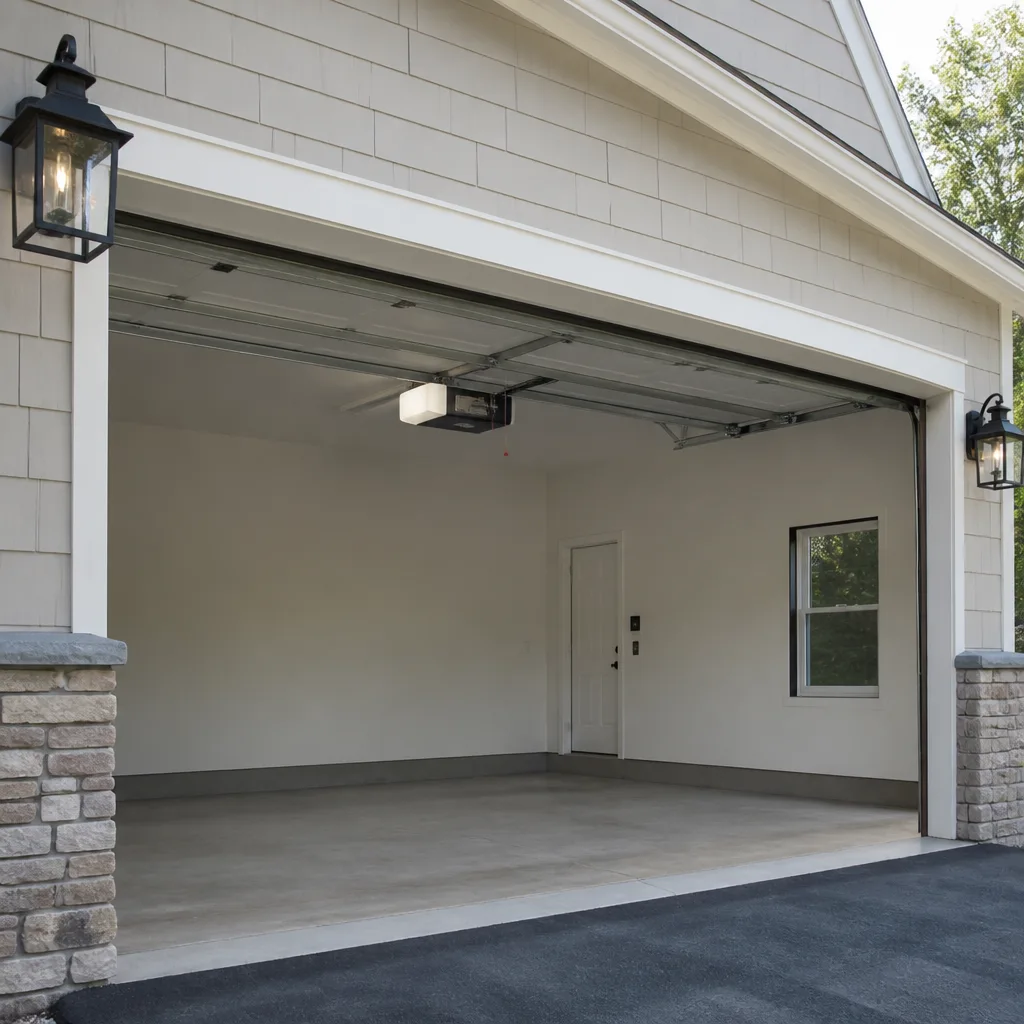
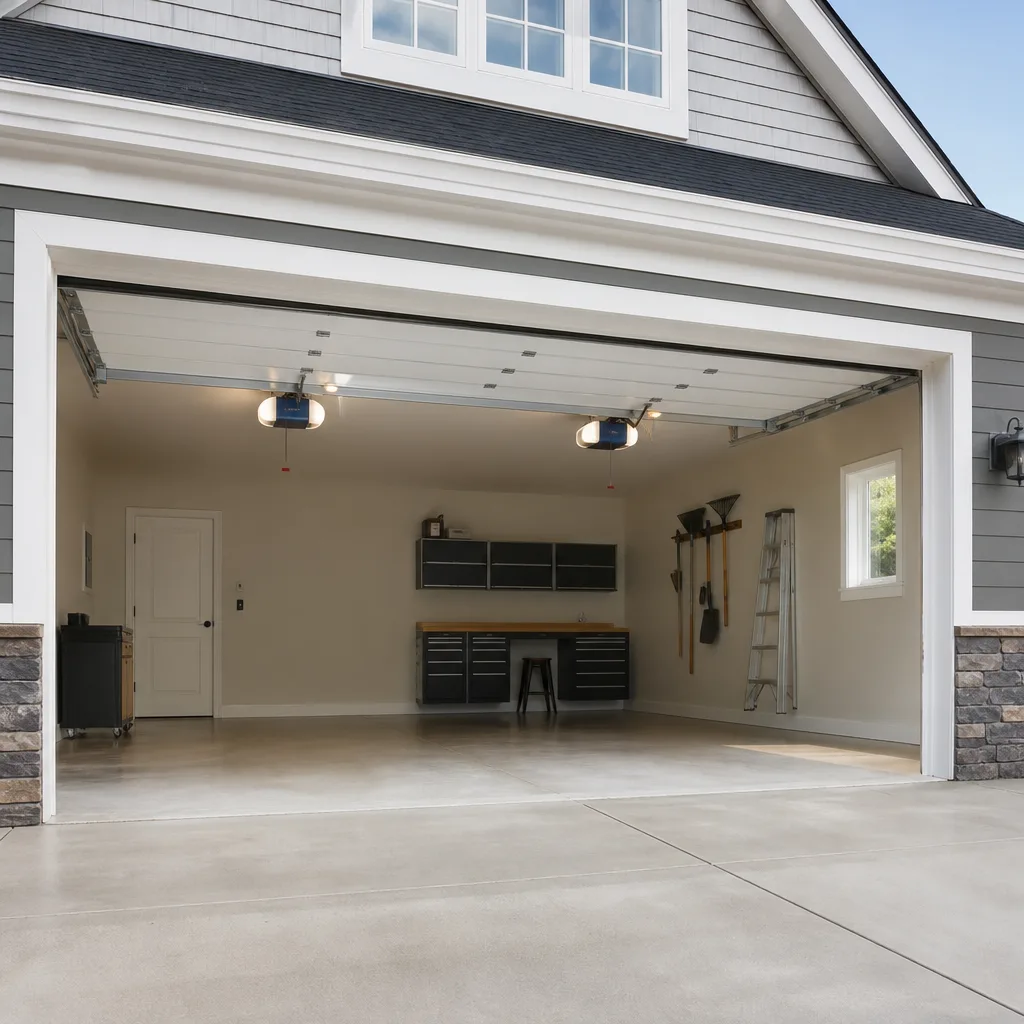
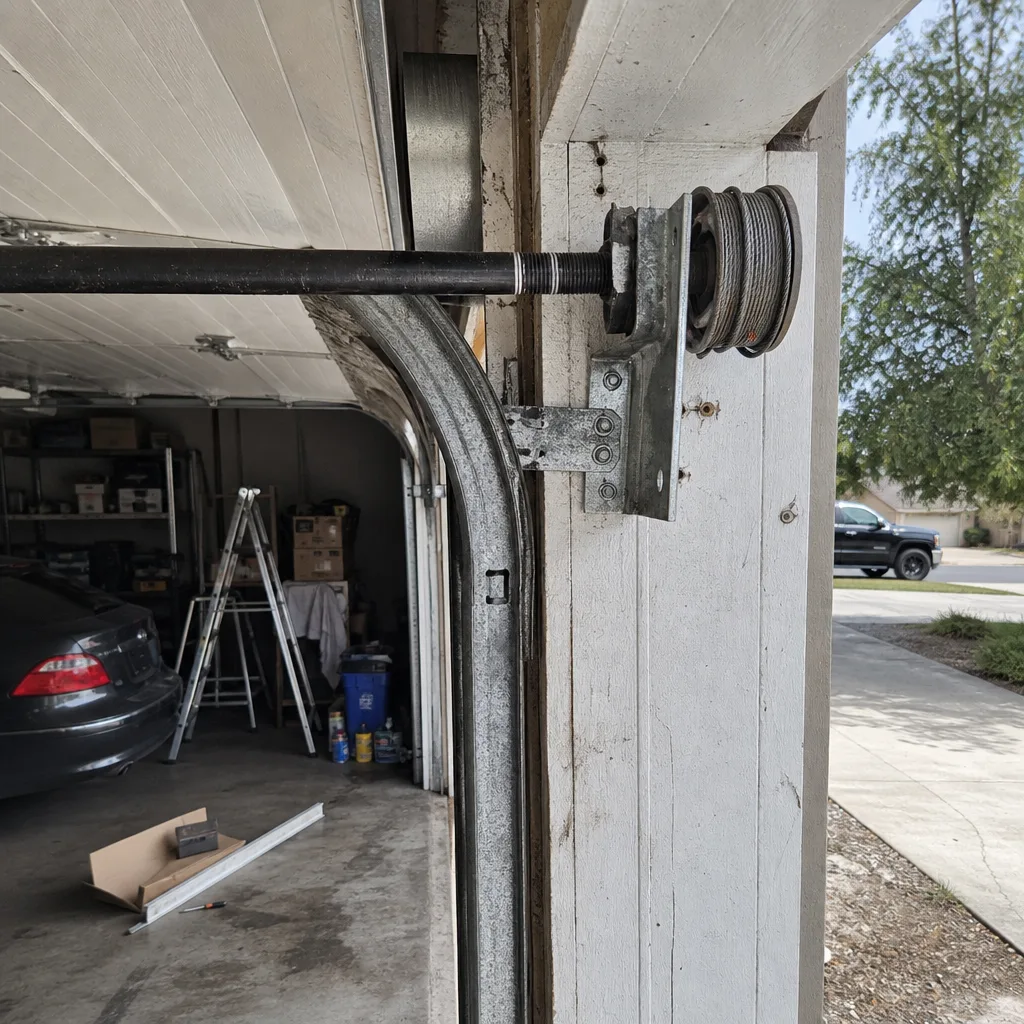 Before
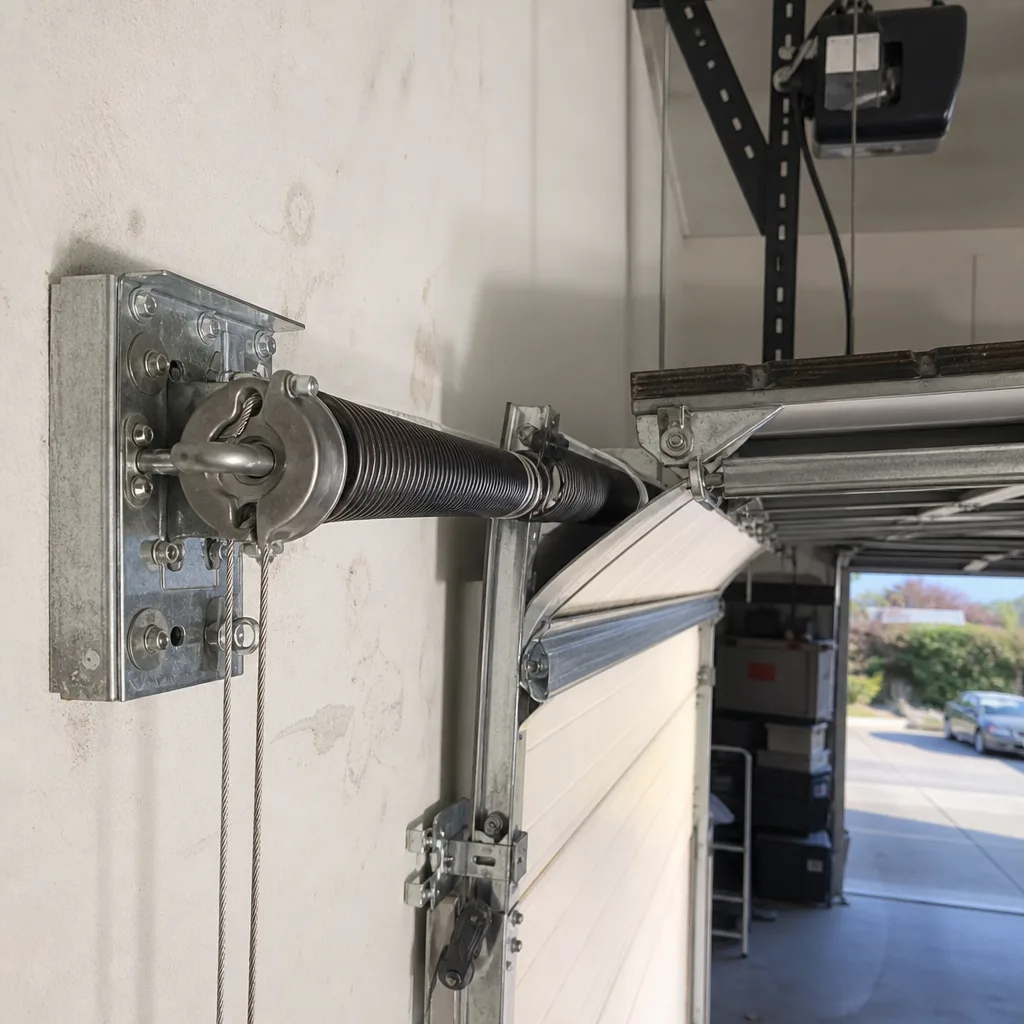 After
After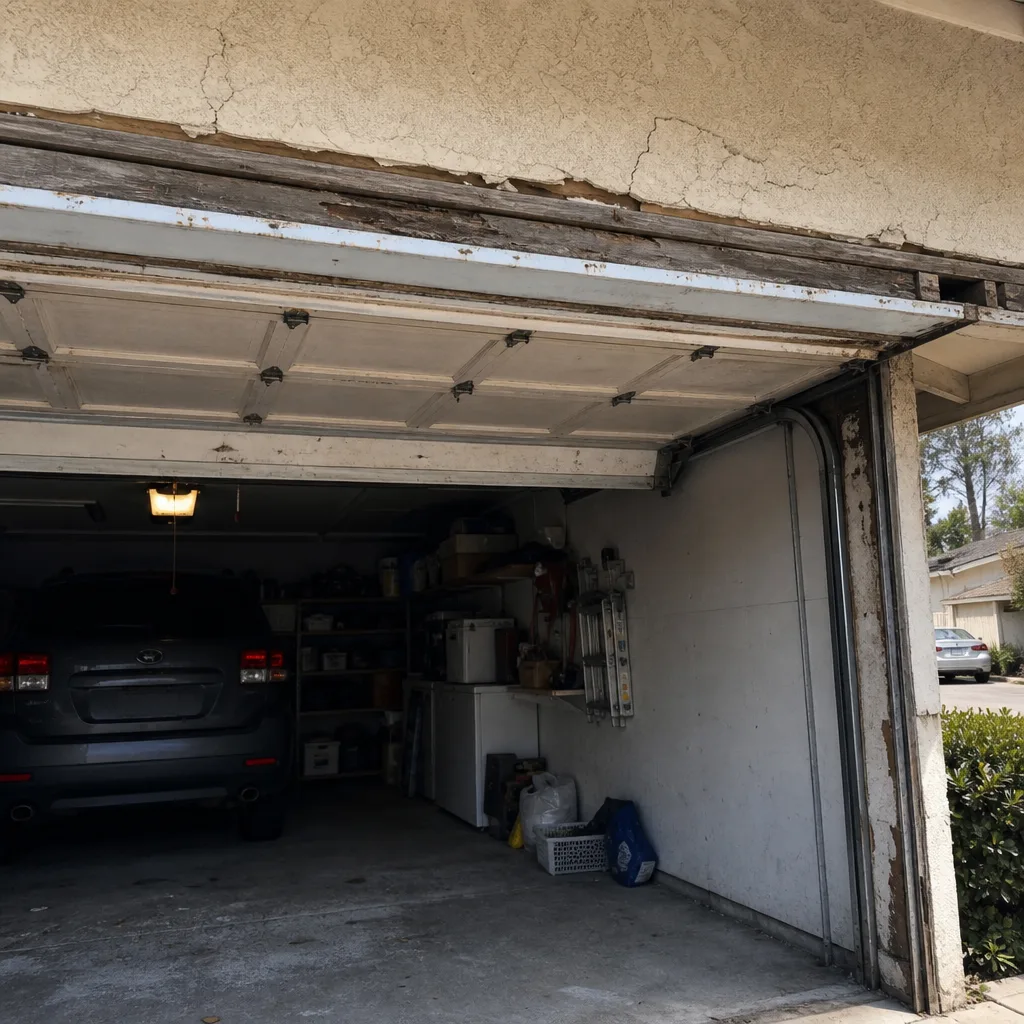 Before
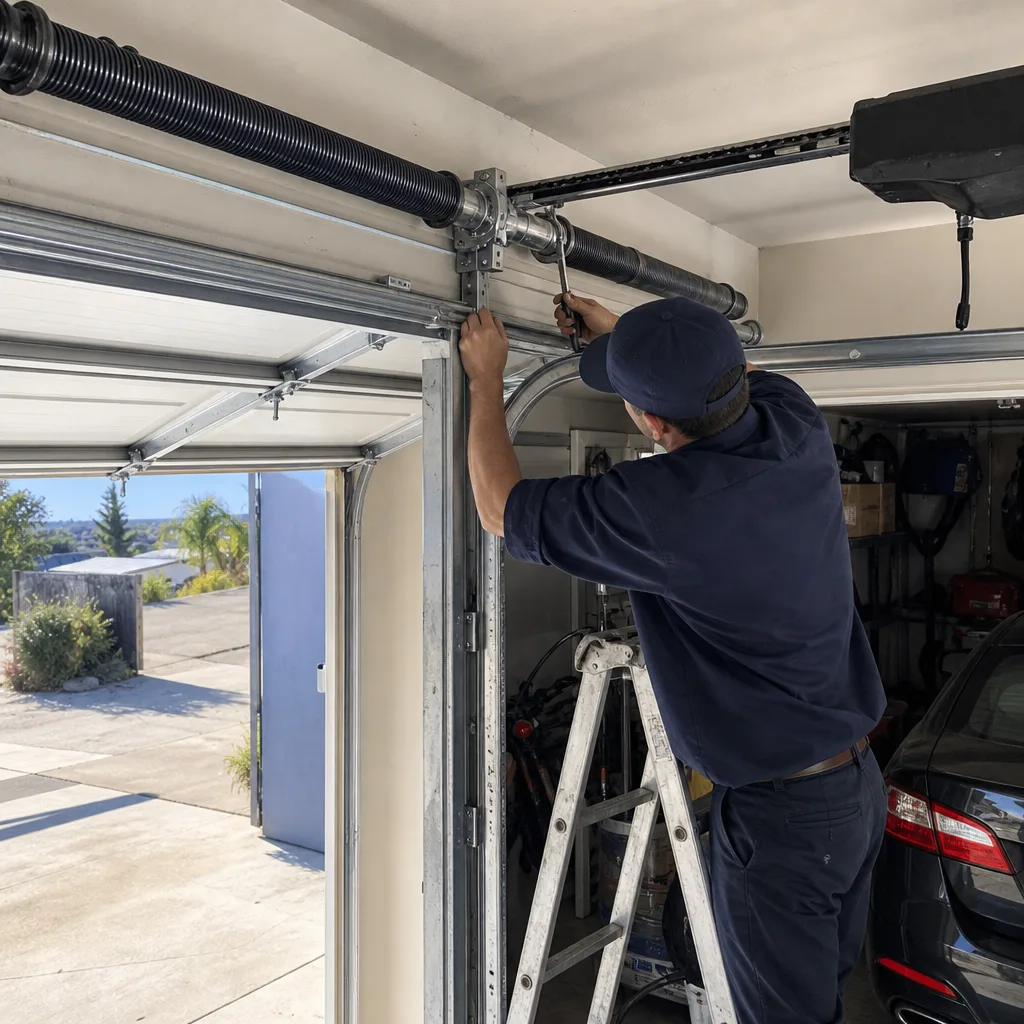 After
After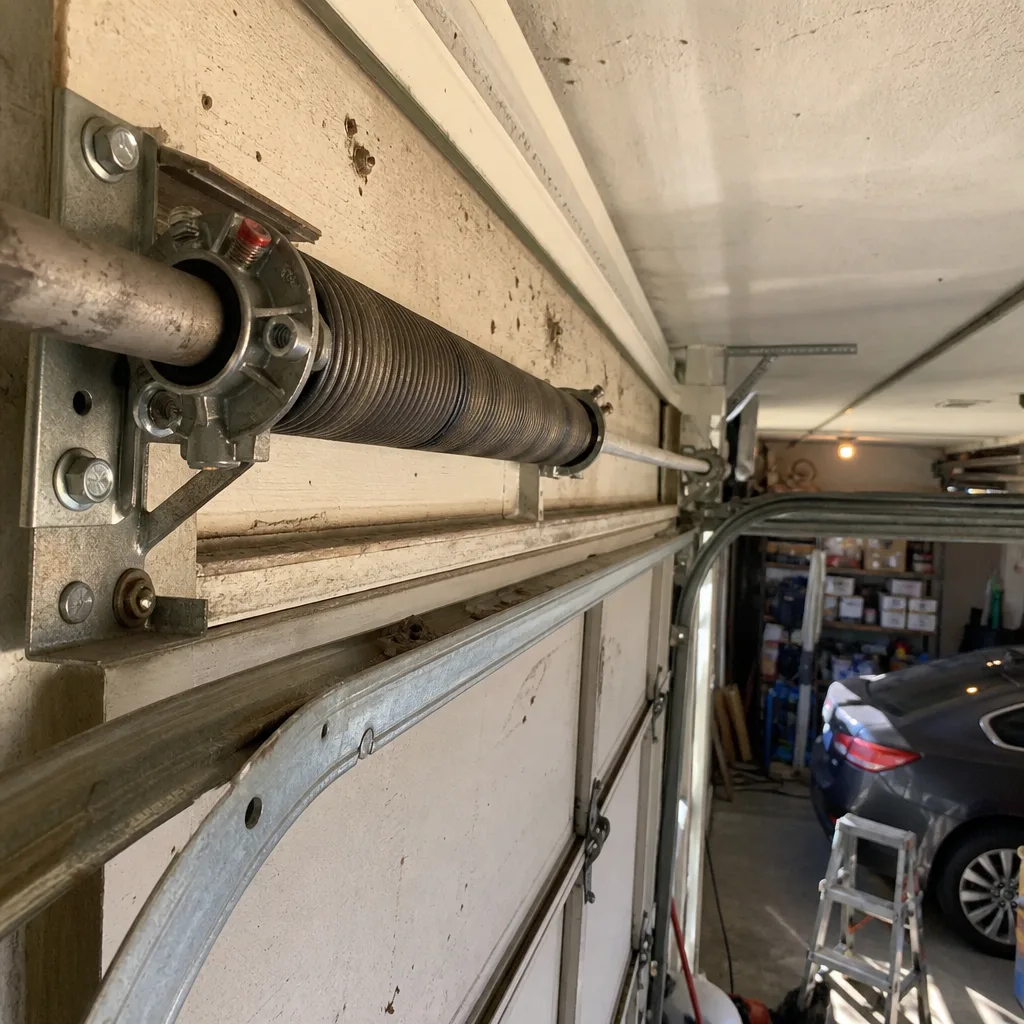 Before
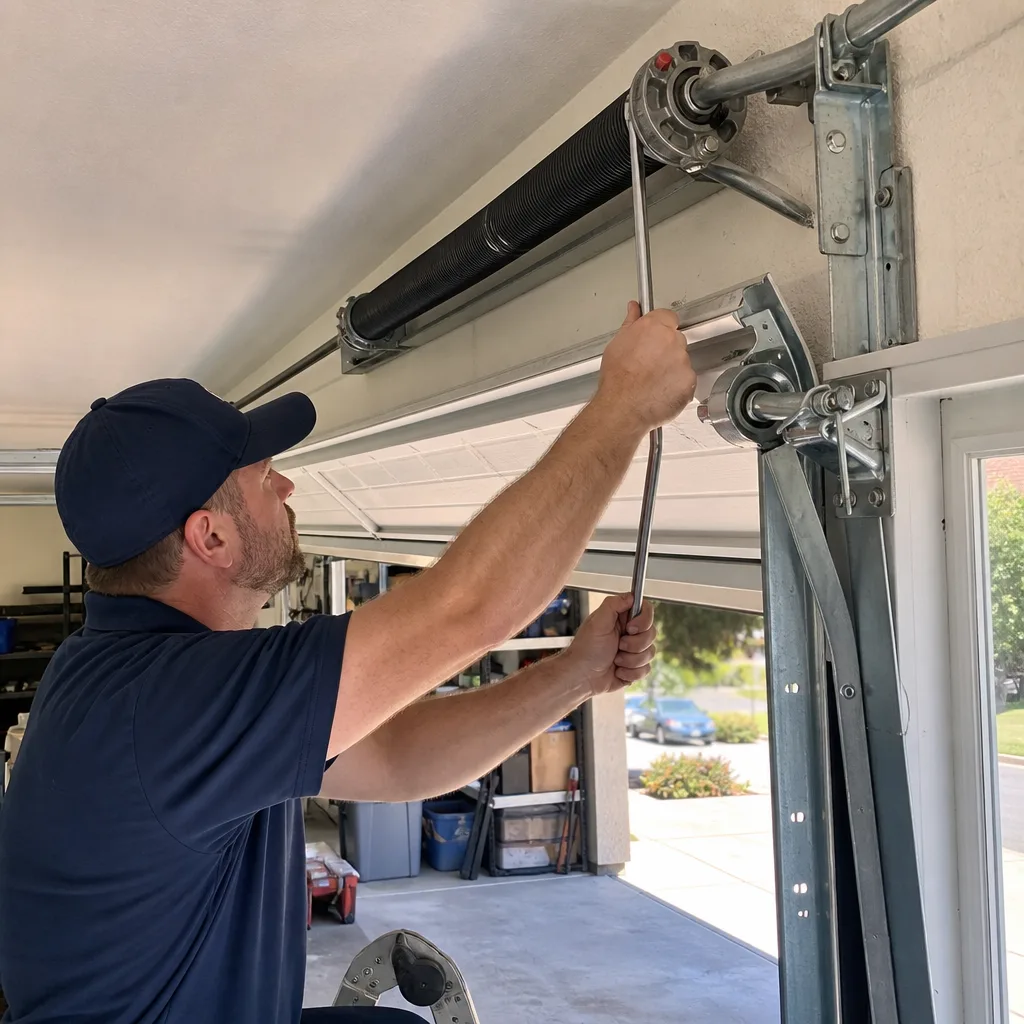 After
AfterCraftsman Torsion Spring Replacement: The Valley Center Owner’s Guide
A Craftsman torsion spring replacement in Valley Center runs $180-$340 installed, and we keep the common sizes on the truck so most swaps happen same-day. If you heard a bang from the garage that sounded like someone dropped a toolbox from a ladder, your spring’s done. The door won’t lift without help, the opener strains or just hums, and that cable hanging loose beside the track is another dead giveaway. We’ve been replacing Craftsman torsion springs across Valley Center since 2004, and Otto Reinhardt himself still takes the calls.
Here’s the straight version: a torsion spring is the counterweight for your garage door. When it snaps, your door becomes 150 to 200 dead pounds of steel and aluminum that wants to fall. Respect it. The spring lives on a shaft above the closed door, and when it fails, the failure is loud, sudden, and final. You don’t patch a broken spring. You replace it, and you replace both if they’re the same age. More on that below.
Key Takeaways
- Craftsman torsion spring replacement in Valley Center: $180-$340 installed, most jobs same-day.
- We stock Craftsman-compatible torsion springs in the common wire sizes and lengths, plus the higher-cycle upgrades.
- Craftsman doors from different decades use different spring specs; we match by measurement, not just by brand name.
- Both springs on a double door get replaced when one breaks. Installing one new spring beside a tired old one is a false economy.
- We’re an independent shop, not affiliated with Craftsman. We carry genuine and quality aftermarket parts for Craftsman, LiftMaster, Chamberlain, and Genie doors.
Which Craftsman Models This Applies To
Craftsman has put its name on garage doors since the 1970s, and the spring specs changed from decade to decade. See, Craftsman doors were built under contract by a few different manufacturers over the years, which means the “Craftsman” badge on the outside doesn’t tell you what spring belongs on the inside. Early wood-panel Craftsman doors from the 1980s and 1990s take different wire diameters than the lightweight steel doors sold through Sears and Orchard Supply in the 2000s and 2010s. A door made in 1995 and a door made in 2015 can both say Craftsman and need completely different torsion springs.
The spring that leaves the factory is matched to the door’s exact weight, height, and drum size. So the first thing we do on any Craftsman spring call in Valley Center is measure the old spring before it goes in the scrap bin: wire diameter, inside diameter, length, and wind direction. The winding cone on the old spring can also tell us whether it was a standard or extended-life spring. If you bought the house with the door already installed, there’s often a sticker near the end bearing plate with the model number, but plenty of those have faded away in the Valley Center sun. When the old spring is in pieces, we fall back on the door’s weight and the drum size, and that gets us to the right replacement every time.
OEM versus aftermarket: for Craftsman doors, the original torsion springs were almost never made by Craftsman. They came from the same spring manufacturers that supply the door makers, often with a different label and a bigger markup. We stock quality aftermarket springs built to the same wire specs and cycle ratings, and we’ll show you the difference on the estimate. A standard spring rated for 10,000 cycles gets you about eight to ten years of normal use. If you open and close that door four or five times a day with a workshop or a side business out of the garage, it’ll go sooner, and we’ll recommend a high-cycle spring that’s rated for 25,000 cycles or more. Most Valley Center homes we see are running their doors three to five times a day, and the springs are lasting toward the upper end of that range. The ones up near Hellhole Canyon and the Pauma Valley, where the dust gets into everything and the temperature swings between July and January are brutal, tend to fatigue faster. Heat doesn’t make a spring snap on its own, but it stresses already-tired metal. Otto counts spring cycles the way you count tire miles, and he’ll tell you what’s left on yours.
Signs Your Craftsman Torsion Spring Replacement Is Failing
- A visible gap in the spring coil. You’ll see a two- to three-inch separation somewhere along the spring’s length, usually right in the middle. A torsion spring that has snapped clean in two will have a rough, shiny break face. Once you see that gap, the spring is doing zero work. The door only moves if the opener drags it, which it wasn’t built to do.
- Loud bang from the garage. This is the big one, and half the time people think someone hit the garage with a truck. The spring is wound tight, holding several hundred pounds of torque. When the steel lets go, all that stored energy releases in a fraction of a second. If you heard this and the door now sits crooked or won’t rise, the spring has already failed, not “starting to fail.”
- Door opens a few inches and stops. The opener is rated for a balanced door, one where the spring does the heavy lifting. Without that counterweight, the opener’s motor hits its force limit immediately. If your Craftsman door rises partway and stalls, or the opener sounds like it’s working harder than it ever has, the spring has likely lost tension or broken outright.
- Cables hanging loose or unwound from the drums. On a healthy door, the lift cables stay taut because the spring keeps tension on the whole assembly. When a torsion spring snaps on one side, that side’s cable goes slack and can pop off the drum entirely. A loose cable beside a door that still half-works is a torsion spring problem, not a cable problem.
- Door feels heavier than it should. If you pull the emergency release cord and try to lift the door by hand, a properly sprung Craftsman door moves with maybe 10 to 15 pounds of effort. If it takes real muscle to move, or if it wants to slam shut when you let go, the spring has lost its charge. Do this check with the door halfway up and one hand on it at all times.
Replacement Cost & What’s Included
In Valley Center, a Craftsman torsion spring replacement runs $180 to $340 installed, parts and labor included. That’s the full job: removing the old spring or springs, measuring for the correct replacement, installing and winding the new spring, rebalancing the door, and testing the full cycle a few times. We lubricate the rollers and hinges while we’re up there, because a dry door wears out springs faster, and we check the cables and drums before we leave. You won’t get a call back in six months because we skipped a step to save ten minutes.
What drives the range? A single spring on a lightweight single-car door sits at the lower end. A double door or a heavier insulated door takes two springs, which means more parts and more labor. If your door runs on older, heavier panels, or if we’re converting a single-spring setup to a dual-spring setup for better balance, that lands at the higher end. The price you hear on the phone is the price you’ll see on the invoice. That’s Otto’s rule and it’s been the rule since 2004. Written on every quote: the number doesn’t change between the phone and the driveway. And every job carries the 90-Day Done Right Promise, in writing, backed by one call to the owner. If it’s not done right, we make it right.
DIY or Call Us?
We’re going to be straight with you: do not attempt a torsion spring replacement yourself. The spring is wound to hold several hundred pounds of torque, and winding or unwinding it without the right bars and a lot of respect for the job can put you in the hospital. This is the one garage door repair where the money you’d save doing it yourself isn’t worth the risk. That’s not a sales pitch. It’s what Otto tells his own neighbors in Valley Center.
What you can safely do: check whether the spring is broken by looking for the gap in the coil, test whether the door feels heavy with the opener released, and take photos of any labels on the end bearing plate if they’re legible. Then call us at (760) 906-8603. We’ll ask a few questions over the phone, give you a straight quote, and tell you if we can get to you same-day. Most Valley Center Craftsman spring jobs we complete in under two hours from the time the truck pulls up. We show up with the springs on board, the background-checked crew in uniform, and the same price Otto quoted on the call.
FAQs
A standard Craftsman torsion spring is rated for about 10,000 cycles, which works out to seven to ten years of typical use for a Valley Center homeowner opening and closing the door three or four times a day. If you use the garage as a primary entry point or run a shop out of it, count on less. We install high-cycle springs rated for 25,000 cycles or more for homeowners who want to replace this part once and forget about it for a good long while. Call (760) 906-8603 and we’ll tell you honestly whether the extra cost of a high-cycle spring makes sense for how you use your door.
No. A torsion spring that has snapped cannot be welded, spliced, or patched, and any shop that offers to do that is guessing. The only safe and correct fix is to remove the failed spring and install a new one matched to your door’s weight and size. When one spring on a two-spring door breaks, we replace both, because the survivor has the same cycle count and will likely fail within months. The estimate we give you over the phone includes everything, and it won’t change when we get to your house.
Most Craftsman torsion spring replacements in Valley Center take 45 minutes to two hours, start to finish. That includes removing the old spring, matching the new one, winding it, and testing the door through several full cycles. We carry the common Craftsman spring sizes on the truck, so there’s no ordering and no second trip. If your door needs a less common spec, we’ll tell you on the phone before we ever leave the shop.
We stock Craftsman-compatible torsion springs in the common wire diameters, lengths, and wind directions, plus high-cycle upgrades, right here in our local shop. We’re an independent provider and not affiliated with Craftsman, but we match springs to your specific door by measurement, not by the badge on the panel. We also keep parts on hand for LiftMaster, Chamberlain, and Genie openers that often share the garage with a Craftsman door. Call (760) 906-8603 and we’ll confirm we have your spring before we roll out.
If your Craftsman door spring is snapped, sagging, or just tired, call Otto’s Garage Door at (760) 906-8603. A live person answers, day or night, and you’ll get a real price before we head your way. Written estimate, no-hassle quote that doesn’t change at the door, and the 90-Day Done Right Promise on every job. Free estimates, no trip charge inside the county, $40 off any repair over $200, and seniors and veterans always save 10%. Otto will tell you what it needs, not what pays better.
Written by Otto Reinhardt, Owner, Otto’s Garage Door at Otto’s Garage Door, serving Valley Center and nearby areas.