

Last updated September 10, 2026
Full 25-point door and opener safety check with every visit - springs, cables, rollers, tracks, and your LiftMaster or Chamberlain opener included
You get a price before we start. It does not change when the truck arrives.

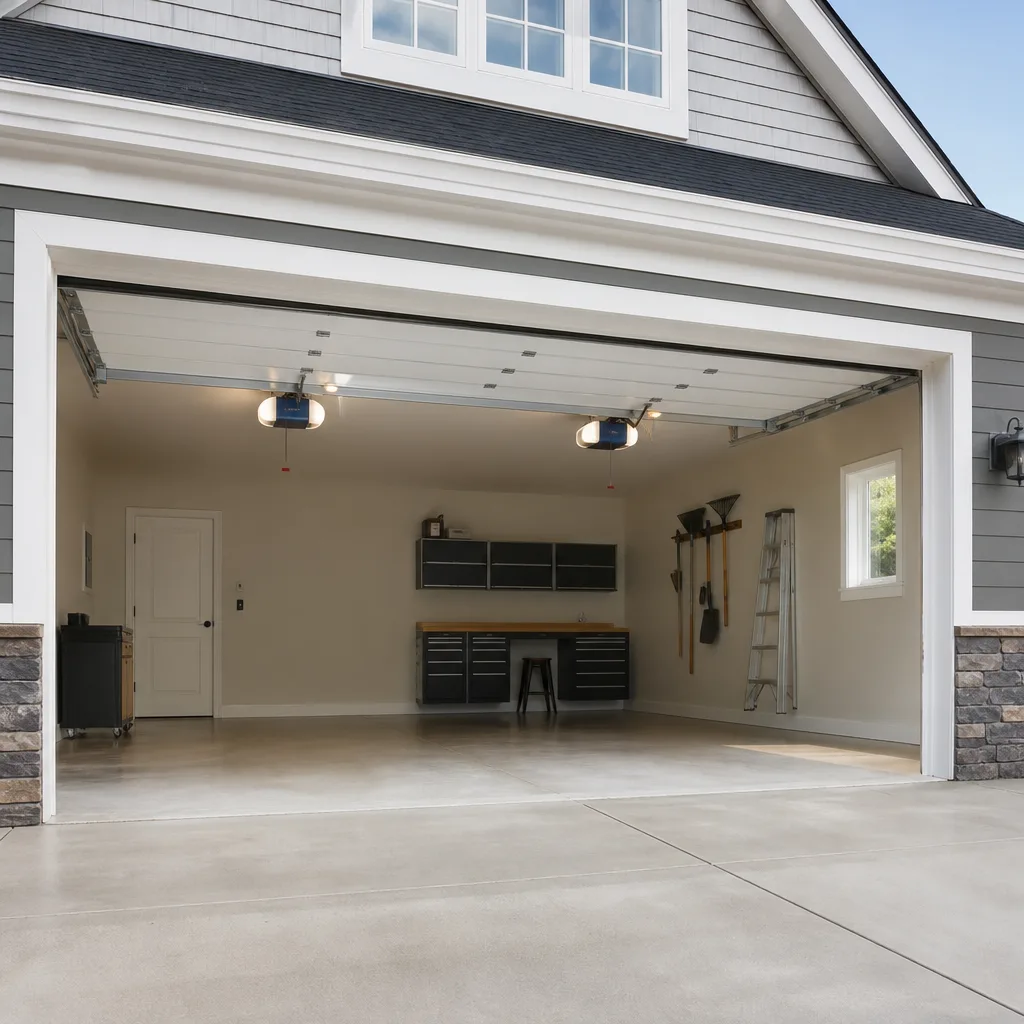
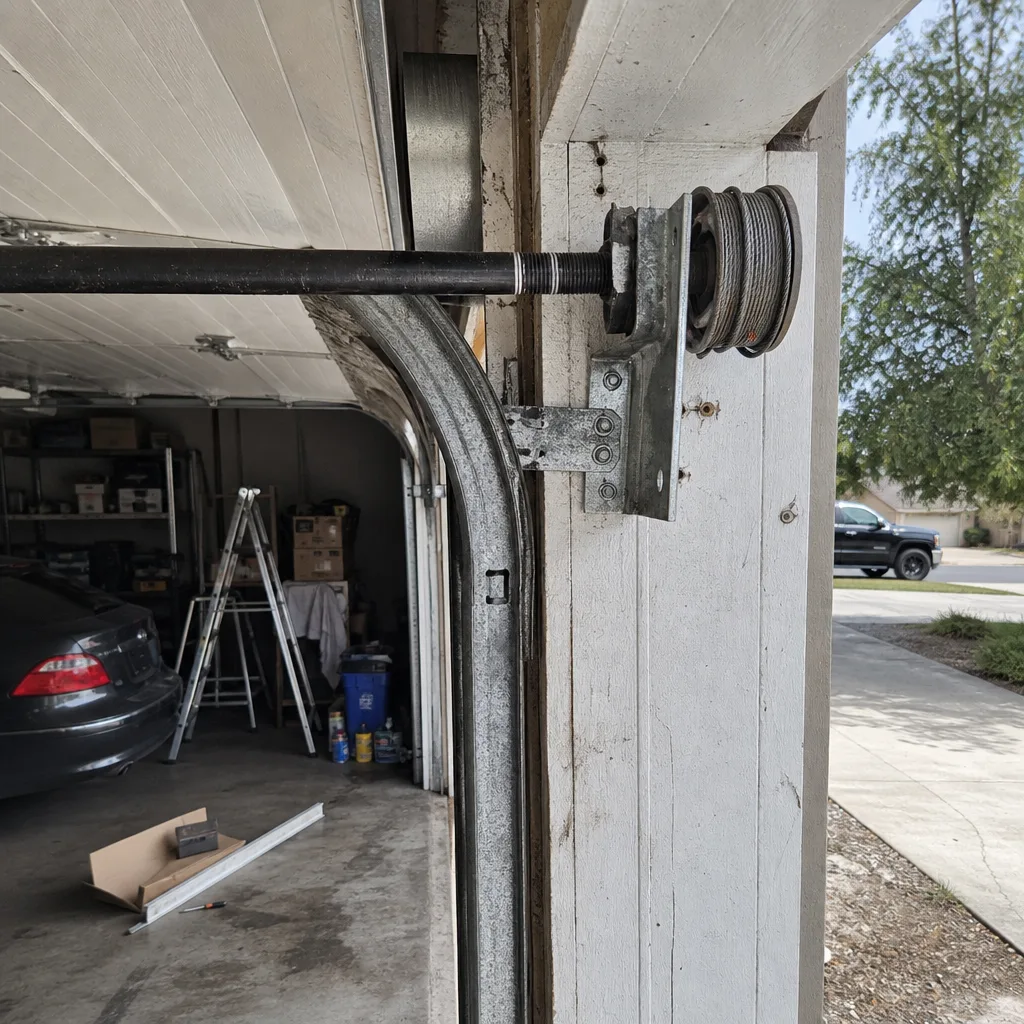 Before
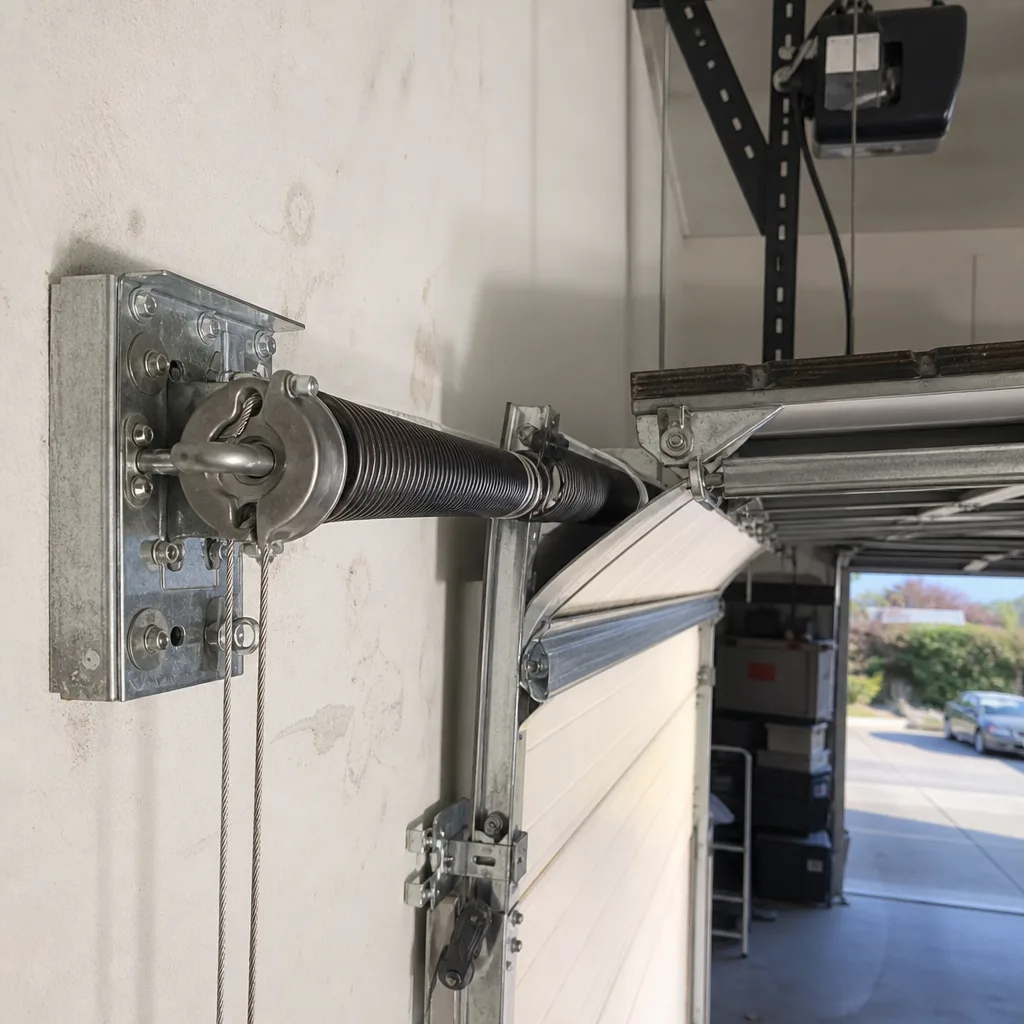 After
After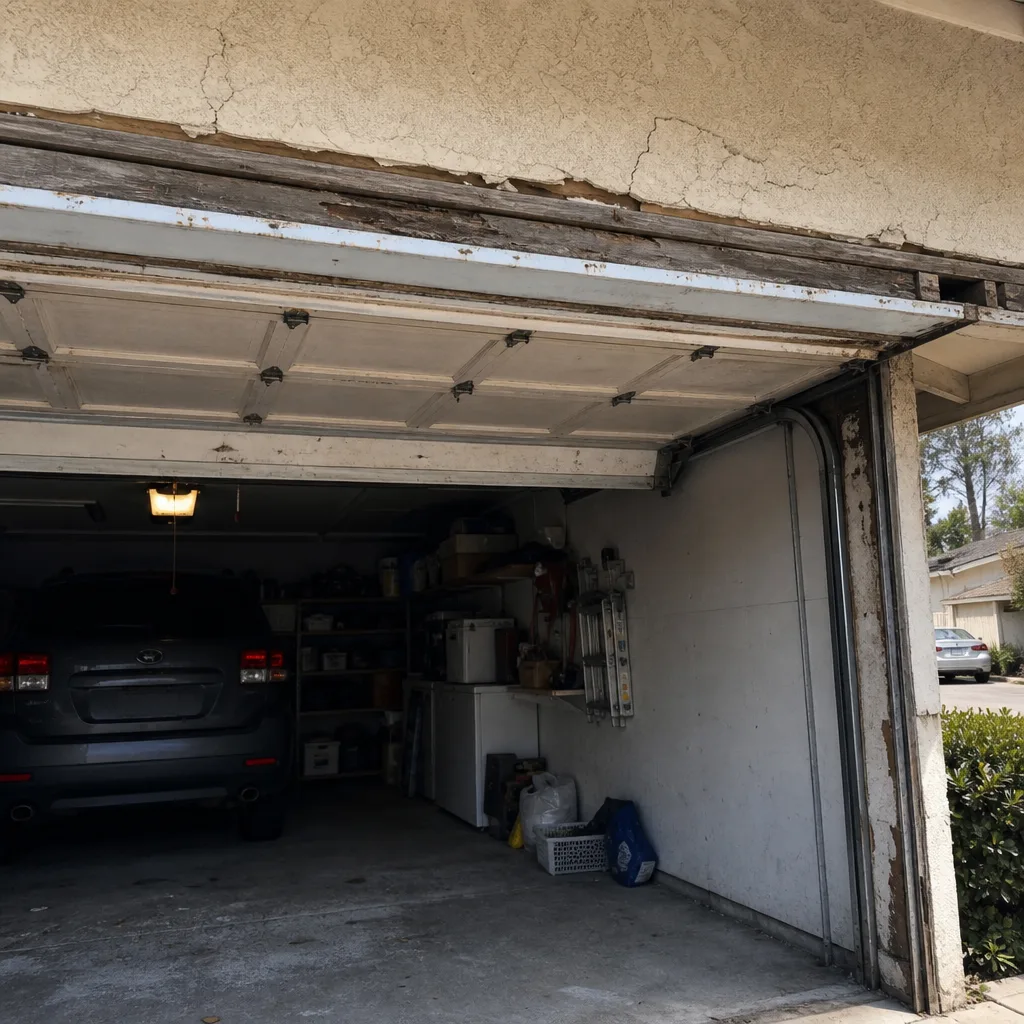 Before
 After
After Before
 After
AfterHow to Hire a Garage Door Contractor in Valley Center: A Step-by-Step Guide
Type “garage door repair Valley Center” into your phone and half the results aren’t contractors at all. They’re lead-generation services that collect your name, your address, and your panic about a 200-pound door hanging crooked over your car, then sell that call to whoever bids lowest that day. The person who shows up might be from Escondido, might be from Temecula, might not have a license number you can verify in any county database. Valley Center sits far enough off the 15 that the good local names don’t always surface in paid search. This guide gives you a vetting process that takes fifteen minutes and keeps the wrong truck out of your driveway, or see more guides & resources for Valley Center homeowners.
Quick Answer
Hiring a garage door contractor in Valley Center means verifying their California State License Board (CSLB) number online, reading a written estimate line-by-line for permit and haul-away charges, and asking whether a live local person answers the phone or a call center routes your job to a stranger. A legitimate Valley Center operator will have a physical address in or near San Diego County, answer “who’s coming to my house?” with a real name, and hold their quoted price at the door.
Table of Contents
- Step 1: Verify the CSLB License Before Anyone Shows Up
- Step 2: Spot a Call Center vs. an Owner-Operator
- Step 3: Why the Lowest Bid in Valley Center Usually Costs More
- Step 4: Read the Written Estimate Like a Contract
- Step 5: Red Flags Specific to Rural San Diego County
- Step 6: Seven Questions to Ask Before You Schedule
- What Garage Door Work Actually Costs in Valley Center
- Brands, Parts, and Valley Center Heat
Step 1: Verify the CSLB License Before Anyone Shows Up
Every legitimate garage door contractor in California must carry a CSLB license in one of two categories: C-61/D-28 (a dedicated door and gate specialty classification) or a broader B general building license. The number means something specific: it tells you who carries the workers’ compensation policy, who the registrar holds responsible if the job goes wrong, and whether anyone has filed complaints or legal actions against the holder. It takes under two minutes to check.
- Go to the CSLB website and select “Check a License.”
- Enter the license number or the business name exactly as it appears on the estimate.
- Look for three things: the license status says “Active,” the business name matches what’s on the van and the invoice, and the address on file is a physical location, not a PO box in another state.
- Scan the “Bond” and “Insurance” lines. If they show “No Coverage” or “Expired,” hang up.
In our experience around Valley Center, the fake and expired license problem shows up most often with online ads that say “garage door repair near me” but list no company name at all. A real local operator puts a license number on the estimate, on the website, and often on the truck. Otto’s Garage Door has a published address and license number any homeowner can verify before the truck arrives. That’s not a marketing claim; that’s the standard you should hold any contractor to.
What the license number also tells you: who is legally responsible if a spring explodes through a wall, if a door falls on a car, or if a 480-volt opener circuit is wired wrong. With an unlicensed operator, that responsibility falls on you and your homeowner’s insurance. With a licensed contractor, the liability sits on the bond and the policy. That difference matters more in Valley Center than in dense city neighborhoods, because emergency response and civil enforcement are slower to reach rural addresses.
Step 2: Spot a Call Center vs. an Owner-Operator
Call the number on the ad and listen. If a script opens with “thank you for calling, your call may be recorded,” and the person on the line cannot tell you who will arrive, what brand of spring they stock, or whether they pull permits in San Diego County, you are not talking to a garage door company. You are talking to a middleman. The next sound you hear will be an auction.
Here’s what an owner-operator sounds like when you call about a broken spring in Valley Center:
- They know the area. They ask whether you’re off Valley Center Road, up near Pauma Valley, or down toward Escondido, because that changes drive time and parts selection.
- They can name spring brands. Not in a boastful way, just in the way someone who has ordered from local suppliers for years naturally mentions that they carry Wayne Dalton and Amarr hardware because those hold up better in coastal-influenced heat cycles.
- They quote a range on the phone and tell you exactly what would change it. “If it’s a standard 7-foot door with a single torsion spring, it’s in this range. If it’s a double-spring low-headroom setup, it shifts.”
- They answer after hours. Not with a pager service, but with a human voice, often the owner’s.
The owner-operator test is simple: ask “what’s your name, and is that the name on the license?” If the answer is a company brand with no human behind it, you’ve got a franchise or a lead-gen operation. If the answer is a person’s name, and that person will be the one standing in your driveway in an hour, you’ve found what actually exists in small-town Valley Center: a local who trades on repeat business and neighbor referrals.
Otto Reinhardt has answered his own phone since 2004. When you call at nine at night because a spring snapped and your truck is locked inside the garage, the voice on the line is the same person whose name is on the van, the invoice, and the license. That’s not a corporate structure; it’s the L.O.C.A.L. values code: Local roots, On time, Community first, Accountable, Loyal.
Step 3: Why the Lowest Bid in Valley Center Usually Costs More
In rural San Diego County, a garage door quote that comes in dramatically under every other bid is not a bargain. It’s a signal. The numbers have to come from somewhere, and in this trade they come out of one of three places: no permit, no insurance, or parts that won’t survive a Valley Center summer.
Here’s what a stranded low bid often means in practice:
- No permit. Garage door replacement involving structural changes in San Diego County requires a building permit in most jurisdictions, including unincorporated areas like Valley Center. An unpermitted job saves you $300 to $600 upfront and becomes a liability when you sell the house.
- No workers’ comp. If an uninsured worker gets hurt on your property, your homeowner’s policy becomes the target. That’s not a theoretical risk; it’s a legal one.
- Parts from a half-pallet out of state. The cheapest torsion spring on the market has fewer cycles and thinner gauge steel. In Valley Center, where summer days climb past 95 degrees and the door gets opened two to four times daily, a 10,000-cycle spring wears out in seven years. A 25,000-cycle spring from a supplier that serves San Diego County runs twice as long.
- Haul-away and disposal “forgotten.” That line appears a week later as a separate invoice, or the old door ends up stacked against your fence.
The right comparison isn’t cheapest versus most expensive. It’s complete versus incomplete. A legitimate Valley Center estimate includes every cost line: parts, labor, permit, disposal, tax. If the math doesn’t add up on paper, it will add up somewhere else, usually in the dark, usually when you’re in a hurry.
Step 4: Read the Written Estimate Like a Contract
A garage door estimate is only as good as what it leaves out. Most homeowners scan the bottom line and stop reading. That’s exactly where the games live. A complete written estimate for a Valley Center garage door job has at least six line items, and you should read every one.
What belongs on the page:
- Parts, itemized by brand and model. Not “spring” but “two P728 0.262 wire torsion springs, 28-inch.” Not “door” but “Amarr Lincoln 3000, 16×7, steel, almond.” If the brand isn’t named, you can’t compare shopping.
- Labor, separated from parts. If they’re lumped together, you can’t see what you’re paying for, and you can’t negotiate fairly.
- Permit fee. This is one of the two line items most often missing. If the job involves replacing the door and track and requires any structural attachment, a permit should be listed. A contractor who says “we don’t need a permit for this” should be asked to say that in writing with their license number on the page.
- Haul-away and disposal. The second most-missing line item. Old doors, old tracks, old springs, and the cardboard from new door packaging don’t fit in your residential trash bin. Somebody has to take them away, and the dump fee in San Diego County is real.
- Tax. If there’s no tax line, the contractor is either absorbing it (fine, but it should say so) or hasn’t thought it through.
- Warranty terms in writing. “90 days” on a scrap of paper means something. “We guarantee your satisfaction” spoken aloud means nothing.
At Otto’s Garage Door, every estimate is itemized and the price quoted on the phone is the price on the invoice. The 90-Day Done Right Promise is written on every job: if it’s not done right, we make it right. One call brings Otto back, no runaround, no customer-service queue. That’s the bargaining power of an owner-operator: the guarantee is backed by a person, not a policy manual.
Step 5: Red Flags Specific to Rural San Diego County
Valley Center isn’t a suburb. It’s an unincorporated town of roughly 10,000 people spread across oak-covered hills, with driveways longer than some city blocks and service distances that make out-of-town contractors think twice. That geography creates specific red flags you won’t see in a Condo Canyon blog.
- No physical address anywhere. A contractor who won’t publish an address probably doesn’t want to be found. In a place like Valley Center, where reputation flows across the feed store and the post office, that’s a bad sign.
- A phone number that routes to a national dispatch center. If the phone menu says “press 2 for residential,” you’re in a call tree, not a local shop. Valley Center matters because a national dispatcher doesn’t know that Old Castle Road is twenty minutes from the 15, and they’ll promise a one-hour arrival that no truck can physically make.
- Vague service zones. “San Diego County” is not a service zone. It’s a 4,500-square-mile landmass. A contractor who can’t name the specific communities they serve, like Valley Center, Pauma Valley, Rincon, and Hidden Meadows, isn’t local.
- The “we’re in your area tomorrow” cold pitch. Contractors who happen to be driving through Valley Center tomorrow with a deal on a door are almost never local, never licensed, and never seen again after the check clears.
- Out-of-area area codes. A garage door contractor serving Valley Center should have a 760 area code or a San Diego County adjacency. A 310, 818, or 702 number that claims to be “local” is telling you something worth hearing.
The antidote to every one of these is the same: ask for the license number, a physical address, and the name of the human who will stand in your driveway. A real Valley Center operator gives you all three before you hang up.
Step 6: Seven Questions to Ask Before You Schedule
You don’t need a home inspection checklist as long as your arm. You need seven questions. Ask them on the phone, in this order, and write down the answers. The answers will tell you more in five minutes than any online review.
- “What’s your CSLB license number, and whose name is it under?” The right answer is immediate and specific. The wrong answer is “we’re insured” (not a license), “we don’t need one for this kind of work” (false for most jobs), or “I’ll have the office send that” (there is no office).
- “Who exactly will be at my house, and is that person your employee or a subcontractor?” The right answer names a person and confirms they’re employed by the licensed contractor. The wrong answer is “a technician” (no name) or “a partner crew” (subcontractor you can’t verify).
- “Do you carry parts for my brand on your truck?” Valley Center is far enough from supply houses that a second trip adds hours. A real local operator stocks LiftMaster, Chamberlain, Genie, Clopay, Amarr, Wayne Dalton, Craftsman, and Raynor parts and can tell you over the phone whether they have your spring size.
- “Do you pull permits in San Diego County?” The right answer is “yes, when required, and the fee is in your estimate.” The wrong answer is “you don’t need a permit for this” delivered as a reflex. Some jobs genuinely don’t require one; the honest contractor explains the difference.
- “Is the price you quote on the phone the price I’ll pay when the job’s done?” The right answer is yes, with the explicit caveat that hidden damage only changes the price with your written approval before any additional work.
- “What’s your warranty, and is it in writing?” The right answer is specific, time-bound, and in writing. Otto’s 90-Day Done Right Promise is written on every invoice. The wrong answer is “we stand behind our work” with nothing on paper.
- “Where’s your shop?” The right answer is a real address in or near Valley Center. The wrong answer is a hesitation, a PO box, or an address that turns out to be a UPS store in Oceanside.
What Garage Door Work Actually Costs in Valley Center
Garage door pricing in Valley Center runs slightly higher than urban San Diego pricing for one simple reason: distance. Supply houses are in Escondido, San Marcos, and Vista, and an owner-operator serving Valley Center spends more time and diesel per job. That’s not a padding excuse; it’s the geography of doing business in a rural county.
Typical Valley Center market ranges, as of 2026:
- Torsion spring replacement (single): $180 to $340 installed, including the spring, labor, and a safety check of the full door. Double-spring setups run $280 to $520.
- Opener repair (logic board, gear kit, sensor): $120 to $280 depending on the part and opener age. Replacement openers run $450 to $850 installed, including programming remotes and keypads.
- Cable or roller replacement: $120 to $220. These are often paired with spring work since worn springs eat cables.
- Full door replacement (16×7 steel, insulation optional): $1,400 to $3,800 installed, depending on insulation, window inserts, and brand. Wood or custom doors start higher.
- Emergency service call (evenings, weekends, holidays): $80 to $150 on top of normal repair rates, with many local companies applying that fee to the repair if you proceed.
These ranges are specific to Valley Center’s market. A quote outside them isn’t automatically wrong, but it deserves a second look and a second opinion.
Every price above should be quoted and agreed before work starts. At Otto’s Garage Door, the no-hassle upfront pricing rule is simple: the number quoted on the phone is the number written on the invoice, and it does not change between the phone and the driveway unless hidden damage is discovered and you approve the new number first. That rule exists because Otto would rather buy a repeat customer for twenty years than squeeze one job for an extra hundred dollars.
Brands, Parts, and Valley Center Heat
The parts that fail on a Valley Center garage door are predictable. Heat cycles stress torsion springs. Dust from the dry hills gets into roller bearings. The damp marine layer that creeps up from the coast in June leaves a film on tracks and hardware. A contractor who has worked this specific microclimate understands which parts hold up and which brands design for it.
In our experience, Amarr and Wayne Dalton doors handle Valley Center’s heat-and-dust combination well because their steel gauges and powder-coated finishes resist the fine grit that clings to everything out here. For openers, the big three, LiftMaster, Chamberlain, and Genie, all manufacture belt and chain drive models that survive San Diego County weather without much fuss. The difference is rarely the brand; it’s whether the installer torques the springs precisely, balances the door, and sets the opener force limits correctly on day one.
A door is 200 pounds riding on two springs. Respect it. That’s not marketing copy; it’s the first thing Otto tells every new customer in Valley Center. The springs carry the entire weight of that door, and the cables are the only thing between the spring energy and a projectile. This is why we never recommend that a homeowner re-tension a torsion spring on their own. The safe path is a trained professional who counts spring cycles the way you count tire miles, and who will tell you what’s left on yours before selling you anything.
Learn more about our Garage Door Repair in Valley Center service, or see what a new Garage Door Installation in Valley Center involves from start to finish.
Common Mistakes to Avoid
- Hiring the first paid ad you click. The top search result is only the top because someone paid for the position. It says nothing about the license, the workmanship, or the warranty. Take the name from the ad, then run the license check before the truck leaves the page.
- Agreeing to a price without a written estimate. A spoken number has no enforcement value. If the contractor won’t write it down, they’re preparing to change it.
- Ignoring the permit question until the work is done. Unpermitted structural work in San Diego County can stall a home sale years later. Ask before you schedule, not after.
- Paying the full amount upfront. A deposit for a custom door is normal. Full payment before the door hangs on its tracks is a red flag in any county, and especially in a place like Valley Center where “the shop is in Escondido” can mean anything.
- Choosing a spring based on cycle count alone. The cheapest 10,000-cycle spring will fail twice as fast as a 25,000-cycle spring in Valley Center’s heat. Over the life of the door, the “cheap” spring costs more.
- Believing a “lifetime warranty” from a company with no listed address. A lifetime warranty is only as long as the lifetime of the business. If you can’t visit the business’s front door, assume the warranty has no front door either.
- Calling an electrician for every opener problem. If the opener is straining, the problem is almost never the opener. It’s the spring or the track. A garage door specialist diagnoses the whole system, not just the motor.
When to Call a Professional
Some garage door work is genuinely dangerous. Torsion springs under tension hold stored kinetic energy, and if a spring lets go, the release can injure anyone standing nearby. Cables under load can snap and whip. A door off its tracks weighs more than most people can catch and less than most people expect. When the repair involves springs, cables, or the door’s frame attachment, call a licensed professional.
You should also call instead of attempting a DIY fix when the door jerks, squeals, or moves unevenly; when water pools on the garage floor after rain; when the opener hums but doesn’t move the door; and when a dated door is beyond repair and needs replacement. These signals indicate systems failing in ways that get worse, not better, and each one has a specific fix that a trained eye can identify in minutes. For free estimates in Valley Center, call Otto’s Garage Door at (760) 906-8603. Otto or a member of his crew will answer, quote the job on that call, and hold the number when they arrive.
Frequently Asked Questions
Go to the CSLB website, search the contractor’s name or license number, and confirm the status reads “Active,” with active bond and insurance coverage. The process takes under two minutes and tells you who is legally responsible for the work, who carries the workers’ comp, and whether any disciplinary actions or complaints are on file.
A complete Valley Center estimate itemizes parts by brand and model, labor, permit fees, haul-away and disposal, tax, and a written warranty with specific terms. If any of those lines is missing, ask why before you sign anything. Call (760) 906-8603 for an exact, itemized quote with free estimates.
Price variation comes from part quality, licensing and insurance compliance, permit handling, and distance from supply houses. A licensed operator who stocks parts on the truck, pulls permits, and hauls away the old door will always quote higher than someone who skips all three. The difference shows up in the length of service life and the size of the invoice a week later.
Yes, in most cases. Otto’s Garage Door keeps Valley Center service calls on a same-day schedule, including evenings and weekends, because a broken spring at 9 p.m. with your vehicle trapped inside is an emergency, not an appointment. A live person answers the phone 24/7, often Otto himself, and quotes the repair on the spot. Call (760) 906-8603.
No. The price quoted on the phone is the price on the invoice. If hidden damage is discovered during the repair, Otto will stop work, show you the issue, get your written approval on a new number, and only then proceed. No invoice surprises, no “the tech found something” upcharges at the door.
Otto’s trucks carry springs, cables, rollers, hinges, sensors, and opener parts for LiftMaster, Chamberlain, Genie, Clopay, Amarr, Wayne Dalton, Craftsman, and Raynor. In Valley Center, a supplier run to Escondido can burn two hours of your day, so we stock up before we roll. For a parts-specific question, call (760) 906-8603 and ask.
The Bottom Line
Hiring a garage door contractor in Valley Center comes down to verification, not vibes, as covered in The Complete Guide to Garage Door in Valley Center. Check the CSLB license. Read the written estimate line by line. Ask for a physical address and a real human name. Refuse to pay before the work is done and the door balances in your hand. The legitimate operators in this county, the ones who answer their own phone and put their name on the invoice, welcome every one of these questions, because the questions screen out the middlemen they despise as much as you do. Do the fifteen-minute vet, and the truck that shows up will be one you’d wave to at the feed store on Saturday.
Start with our Otto’s Garage Door home page or explore Garage Door Opener in Valley Center service details.
Written by Otto Reinhardt, Owner at Otto’s Garage Door, serving Valley Center since 2004.