
Last updated September 10, 2026
Full 25-point door and opener safety check with every visit - springs, cables, rollers, tracks, and your LiftMaster or Chamberlain opener included
You get a price before we start. It does not change when the truck arrives.
 Before
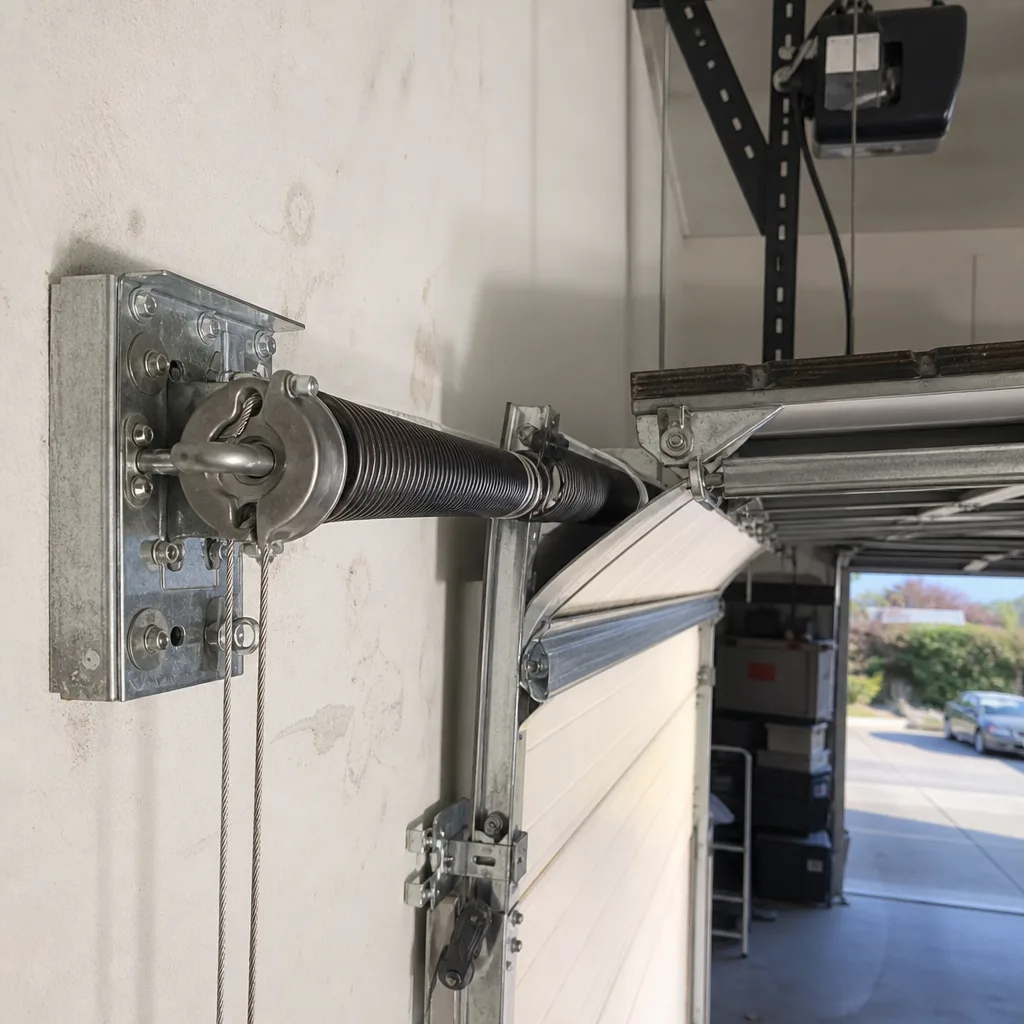 After
After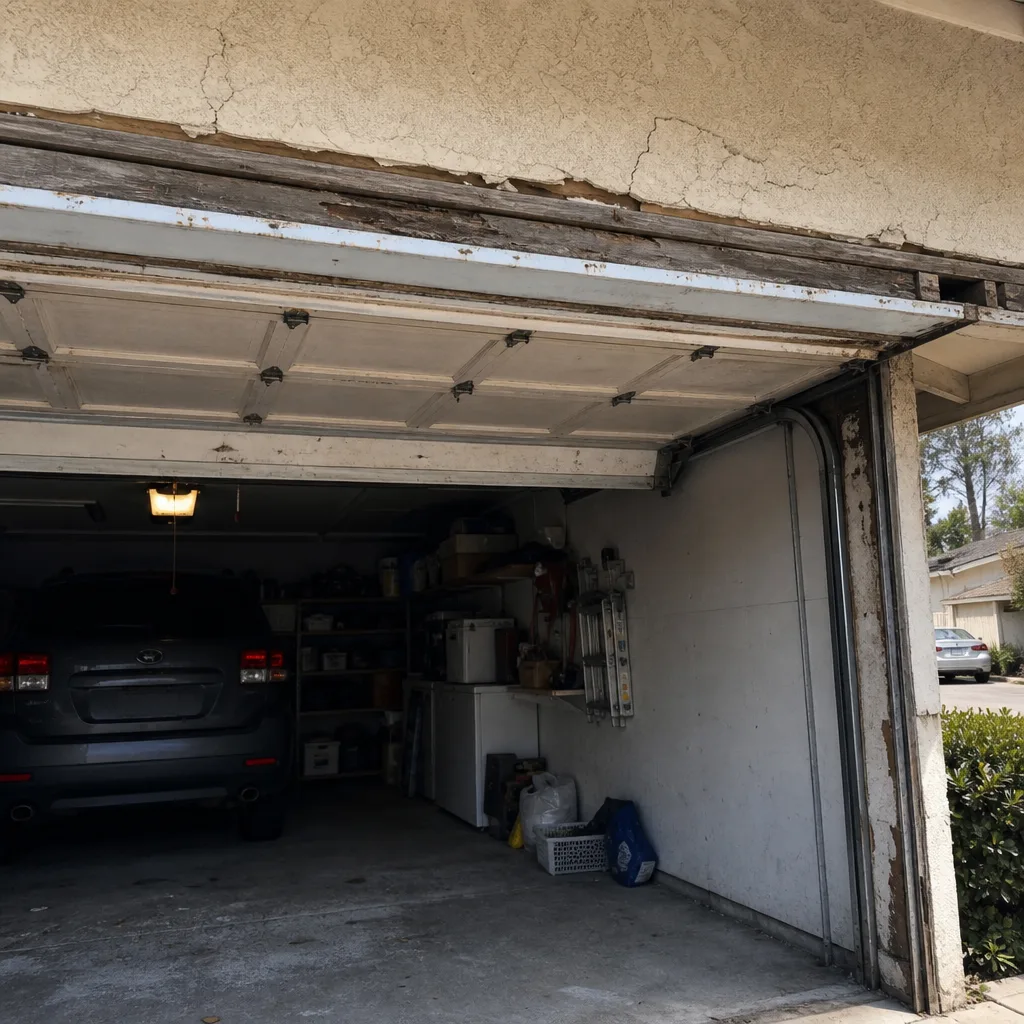 Before
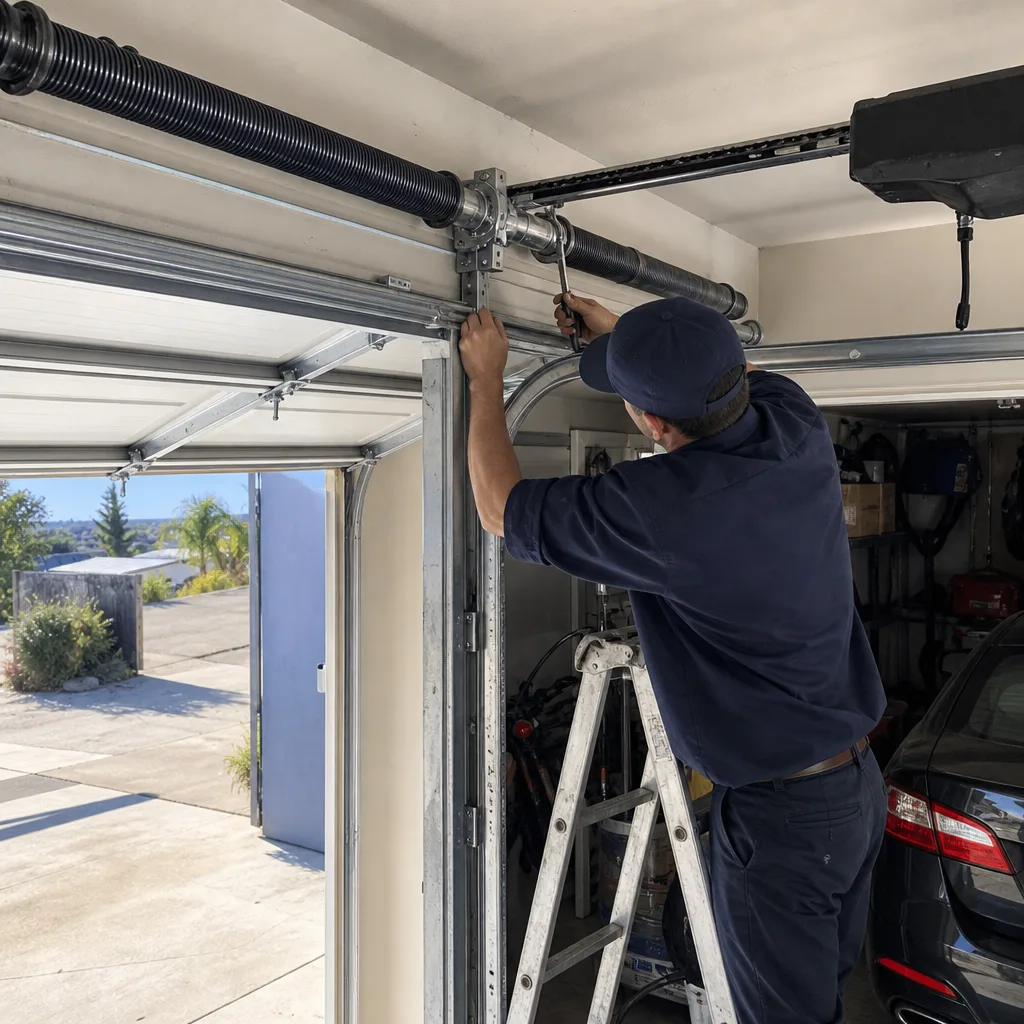 After
After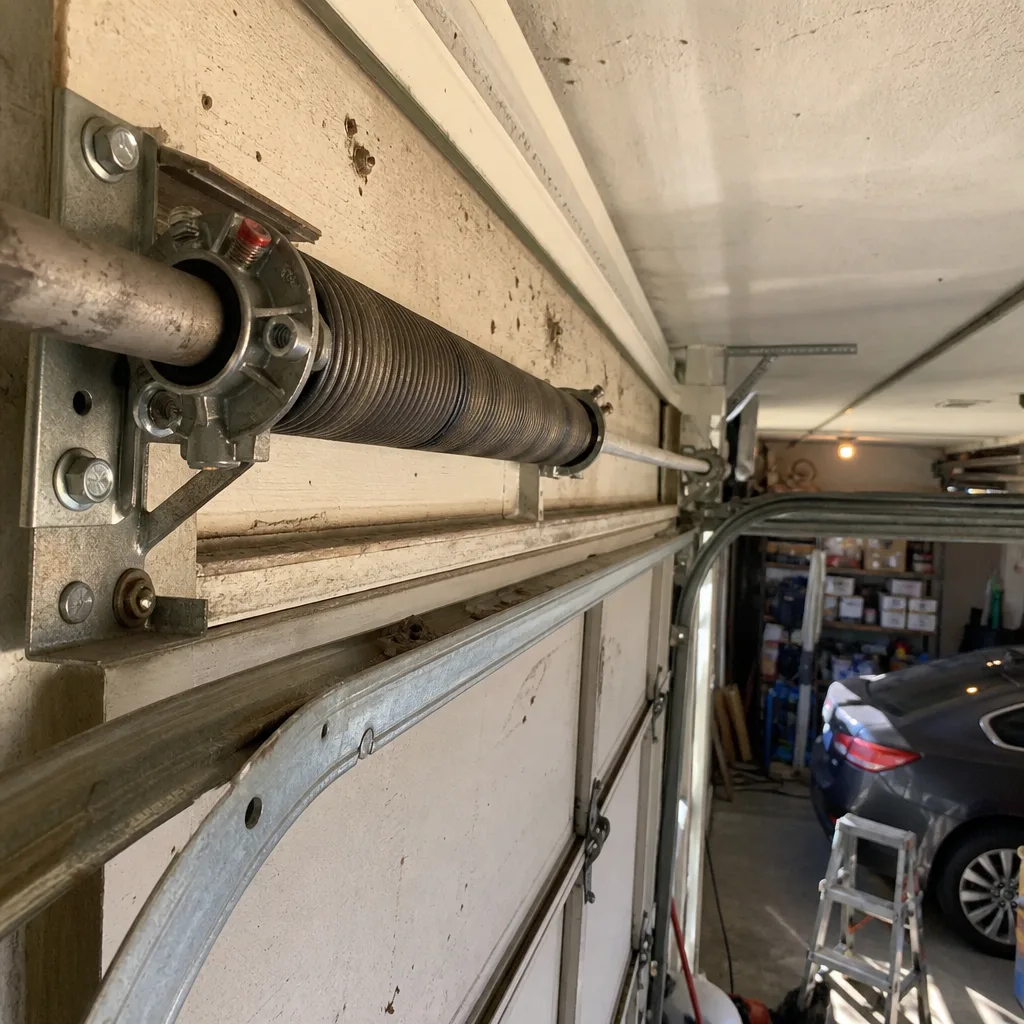 Before
 After
AfterGarage Door Cost Breakdown: The Valley Center Homeowner’s Reference for 2026
The $800 national average for a garage door replacement means nothing if you’re on a rural road past Lilac and the nearest supply house is forty minutes away. National cost guides pull from suburban markets where three installers bid on every block and parts arrive same-day from a warehouse ten minutes out. Valley Center doesn’t work that way. What you’ll actually pay for a new door, a spring replacement, or an opener upgrade in 2026 depends on drive time, county permit fees, and whether your installer keeps inventory or special-orders every panel. This guide breaks down the real line items so you know what you’re paying for, what’s negotiable, and what a low bid quietly leaves out; for more guides & resources, see our blog.
Quick Answer
In Valley Center, a garage door replacement runs roughly $1,700 to $4,200 installed in 2026, depending on door type, insulation, and whether county permits apply. Single-layer steel doors land at the lower end around $1,700 to $2,400; insulated steel doors typically run $2,500 to $3,800 with labor; and wood-composite doors start near $3,500 and climb past $6,000 for larger or custom jobs. Add $80 to $250 for a San Diego County permit when required, plus $50 to $150 for haul-away of the old door if that’s not already in the bid.
Table of Contents
- Material Costs: The Three Door Types That Actually Work in Valley Center
- Labor Factors Unique to Rural San Diego County
- Permits in San Diego County: When You Need One and What It Costs
- Opener Add-Ons: What’s Worth Your Money in a Hot Inland Climate
- How to Compare Two Bids Side-by-Side Without Getting Burned
- Full Replacement vs. Repair: The Break-Even Math
- Common Mistakes to Avoid
- When to Call a Professional
- Frequently Asked Questions
- The Bottom Line
Material Costs: The Three Door Types That Actually Work in Valley Center
Valley Center sits in a hot inland microclimate where summer afternoons push past 95 degrees and winter mornings drop near freezing. Your garage door is the largest moving surface on your home and it faces direct sun most of the year. The right door for this climate isn’t the cheapest one on the shelf. It’s the one with the R-value that keeps your garage from becoming a kiln in August. Here’s what each door type actually costs and where the money goes.
Single-Layer Steel: $800 to $1,400 for the Door Alone
Single-layer steel is one sheet of 24 or 26-gauge steel with no insulation behind it. These doors are light, inexpensive, and they work. But in Valley Center’s summer heat, an uninsulated steel door turns your garage into a solar oven. If your garage is detached and you don’t store anything temperature-sensitive in it, this is a fine budget choice. If your garage shares a wall with living space, you’ll feel the heat bleed through. In our experience, single-layer steel makes up about 30 percent of replacement jobs in Valley Center, mostly on detached garages and rental properties.
Insulated Steel: $1,300 to $2,500 for the Door Alone
Insulated steel doors sandwich a layer of polystyrene or polyurethane foam between two steel skins. The R-value math matters here. Polystyrene panels typically land around R-6 to R-9, while polyurethane runs R-12 to R-18. That difference is real when your west-facing garage bakes from noon to sunset. Polyurethane also adds structural stiffness, which means fewer dents from a bike handle or a ladder slipping. For attached garages in Valley Center, this is the sweet spot: you’re paying roughly $500 to $1,000 more than single-layer and you’ll recover it in comfort and in not replacing the door after the first kid on a skateboard finds it. Clopay and Amarr both make solid insulated lines, and Raynor’s polyurethane doors hold up particularly well in high-heat, high-UV exposure like we get here.
Wood-Composite: $2,800 to $5,500 for the Door Alone
Wood-composite doors give you the look of stained timber without the warping that kills real wood in a hot, dry climate. They’re heavier than steel, which means the springs and opener need to be sized for the weight, not whatever was on the old door. In Valley Center, wood-composite is a common choice on custom homes and horse properties where curb appeal matters and the garage faces the road. Plan on higher maintenance in direct sun: you’ll refinish or reseal the exterior face every three to five years, or the UV will haze it. These doors aren’t cheap, but they’re the only option that gives you the wood aesthetic without asking for a service call every time the humidity shifts.
Labor Factors Unique to Rural San Diego County
Labor is where Valley Center pricing parts ways with the national averages. The same door that costs $1,100 to install in Escondido can cost $1,400 here, and it’s not because anyone’s gouging you. It’s because the job genuinely takes longer and costs more to do right. Here are the factors that show up on a rural invoice and why they’re legitimate.
Drive Time and Route Density
A door company working a dense suburban route can knock out four or five jobs in a day because every stop is fifteen minutes from the last one. In Valley Center, a typical residential job is thirty to forty minutes from the nearest supply house and the route might include one or two jobs total. That time has to be priced somewhere, and the honest way to price it is as a labor line item, not buried in a markup on the door itself. When you see a bid with higher labor than you expected, ask what’s in it. If the answer is “drive time and fuel,” that’s a contractor being straight with you.
Haul-Away Fees
Your old door weighs between 150 and 400 pounds, and someone has to load it, strap it, and haul it to a disposal facility that charges by weight. In unincorporated San Diego County, that facility might be twenty or thirty miles from Valley Center. Expect $50 to $150 for haul-away as a separate line item. Any bid that doesn’t mention it will either surprise you with the fee later or leave the old door stacked against your fence on a Saturday afternoon.
Local Stock vs. Special Order
This is the quietest cost driver in the whole equation. A company that keeps common door sizes and spring stock in local inventory can quote an accurate price and install within days. A company that special-orders every door ends up paying freight on a single unit, passing that to you in the form of a “shipping” line item or a padded materials number. For a garage door installation in Valley Center, it’s worth asking directly: “Do you have this door in stock, or are you ordering it?” The answer tells you whether the timeline is real and whether the price will hold. At Otto’s Garage Door, we keep the most common residential sizes and spring types on the truck or in local stock because nothing’s worse than quoting a price and then calling the homeowner back with “it’ll be a few more weeks and a few hundred more dollars.”
Permits in San Diego County: When You Need One and What It Costs
San Diego County requires a building permit for garage door replacements in most cases, especially when the door is part of a dwelling unit or changes the structural opening. For full details, see Garage Door Permits, Codes & Inspections in CA: What You Need to Know. The permit fee for a standard residential garage door replacement in unincorporated areas like Valley Center typically runs $80 to $250, depending on the valuation of the work and current county fee schedules. Some minor repairs, like replacing springs, rollers, or an opener that’s a same-for-same swap, don’t trigger a permit. Changing door size, adding a new opening, or modifying the header does.
Here’s the part that matters for your wallet: any bid that doesn’t include the permit as a visible line item is either not pulling one, or is planning to hit you with it later. The bid you accept should name the permit fee, name who pulls it, and include that in the total. A licensed contractor can pull the permit on your behalf. If the company tells you “you don’t need a permit for this” and your door is attached to your home, get a second opinion. The county’s requirement doesn’t change because a bidder wants to close the job faster. When we quote a full replacement here, the permit is on the estimate, and we pull it. It’s part of respecting the customer and the county we’ve worked in since 2004.
For a full breakdown of what a replacement job involves from start to finish, our garage door repair page for Valley Center covers the process and what to expect on install day.
Opener Add-Ons: What’s Worth Your Money in a Hot Inland Climate
Openers have quietly become computers with a motor attached. Every manufacturer pushes a feature package: battery backups, Wi-Fi modules, camera integrations, safety beam upgrades, quiet-drive belts. Some of these earn their place on a rural property. Some are upsell noise. Here’s the honest math for Valley Center, where power outages on the east side of the county aren’t a theoretical exercise.
Battery Backup: Worth It Here
Valley Center loses power during Santa Ana wind events and wildfire-prevention shutoffs more than most of coastal San Diego. When the power’s out, a garage door without battery backup means you’re pulling the red release cord and lifting a 200-pound door by hand, assuming you can even get inside the garage. A battery backup unit adds $100 to $300 to an opener install. For most Valley Center homes, that’s money well spent. LiftMaster and Genie both build solid battery-backup openers, and retrofit battery kits exist for many models.
Smart Connectivity: Convenient, Not Essential
Wi-Fi-connected openers let you check from your phone whether you left the door open, close it remotely, and receive alerts when it operates. For a rural household with a commute or frequent trips into town, this is genuinely useful. Whether it’s worth $50 to $150 depends on whether you’ll actually check the app. In our experience working Valley Center neighborhoods along Valley Center Road and out toward Cole Grade, most families who buy it use it. Most families who skip it don’t miss it. This one’s a preference call, not a performance call.
Safety Sensor Upgrades: Not Optional on a Modern Opener
Since 1993, federal law has required electric eye safety sensors on all residential openers. If you’re replacing an opener on an older home, you’re getting sensors regardless of what the bid says. The “upgrade” versions add features like angled alignment tolerance or weather sealing for installations where sun glare trips the beam. In Valley Center’s bright afternoon light, a west-facing garage door can false-trigger standard sensors. Spending an extra $30 to $60 on glare-resistant sensors and proper alignment brackets saves you the frustration of an opener that reverses for no reason at 4 p.m. every day.
For a deeper look at opener options and what’s changed in recent years, see our garage door opener guide for Valley Center.
How to Compare Two Bids Side-by-Side Without Getting Burned
Two companies can quote the same door and land $900 apart. The difference is rarely profit margins. It’s scope. Here’s a step-by-step method for reading two bids and finding the gap before you sign.
- Check the door specification line. Model number, size, R-value, and insulation type should be spelled out. A bid that says “16×7 steel door” without a model is a bid on a mystery. Ask for the manufacturer and model. Then compare those exact specs between bids, not the marketing adjectives.
- Look for the permit line item. If one bid includes a $120 county permit and the other doesn’t, the second bid isn’t $120 cheaper. It’s incomplete. Recalculate with the permit added, then compare.
- Compare the spring type. This is the line item where low bids quietly cut corners. Torsion springs rated for 10,000 cycles cost $150 to $250 installed in a pair. Economy springs rated for 5,000 cycles run half that. The cheaper bid nearly always uses the lower-cycle spring, which means you’re paying for another spring replacement in two to four years instead of seven to ten. Ask both companies: “What cycle rating are the springs in this quote?” If you get a blank stare, walk away.
- Confirm haul-away and old-door disposal. Both bids should state it. If one doesn’t, add $50 to $150 to make it comparable.
- Check the labor warranty length. One year is standard for labor. Ninety days is common but below average. If a bid offers no labor warranty in writing, it means the installer isn’t standing behind his own work. At minimum, get the labor warranty and the spring cycle rating in writing on the estimate itself.
Full Replacement vs. Repair: The Break-Even Math
Not every garage door problem means a new door. Here’s the practical math we apply when a Valley Center homeowner asks us whether to repair or replace, drawn from our Garage Door Repair Maintenance Checklist for Valley Center Homeowners.
If the door is under ten years old and the issue is a single component, a broken spring, a snapped cable, a bent track repair is almost always the right call. The repair costs $200 to $500, and the door’s got another decade in it. If the door is over fifteen years old, has multiple failing parts, and shows rust at the bottom panels or splitting at the hinges, you’re looking at $800 to $1,200 in repairs over the next few years. At that point, a new insulated door at $2,500 to $3,500 installed is the smarter money. The break-even lands around year twelve to fifteen for most doors in Valley Center’s climate, sooner for uninsulated doors that have baked in summer sun for a decade.
And one more thing that rarely shows up in a cost guide: if your door was installed before 2010 and lacks a modern reversing mechanism or photo-sensor compliance, replacement upgrades the safety of the whole system. That’s not a cost. It’s part of what you’re paying for. Our Otto’s Garage Door home page has more on how we approach repair versus replacement calls.
Common Mistakes to Avoid
- Bidding on the national average. Valley Center pricing runs 15 to 25 percent above national medians because of drive time, haul-away distance, and permit fees. If you use the national average as your budget anchor, every real bid will feel high.
- Accepting a bid with no spring cycle rating. The spring is the most-replaced moving part on your door. A 5,000-cycle spring means a replacement in roughly three years of normal use. A 10,000-cycle spring doubles that. Always ask for the rating in writing.
- Assuming the motor is the problem when the door struggles. At Otto’s, we have a saying: if the opener is straining, the problem is almost never the opener. A binding track, an unbalanced door, or worn rollers makes the motor work harder. Replace the opener without fixing the door, and you’ll burn out the new one too.
- Forgetting that a west-facing garage in Valley Center gets brutal afternoon heat. An uninsulated steel door on a west-facing attached garage will push heat into your living space every summer afternoon. Insulation is not a luxury feature here. It’s climate adaptation.
- Comparing bids that don’t list haul-away. The old door has to go somewhere. If it’s not on the bid, it’s not in the price, and you’ll discover the difference on install day.
- Skipping the permit because it’s easier. An unpermitted door replacement can bite you at resale, especially in an unincorporated county where inspections are lighter but the paper trail still matters. If a contractor suggests skipping the permit on a replacement, that’s a signal about how they handle code on everything else.
- Paying the full contract price up front. In California, a contractor may not ask for more than 10 percent or $1,000, whichever is less, as a down payment on a home improvement job. Any garage door company demanding half up front is either uninformed or acting in bad faith.
When to Call a Professional
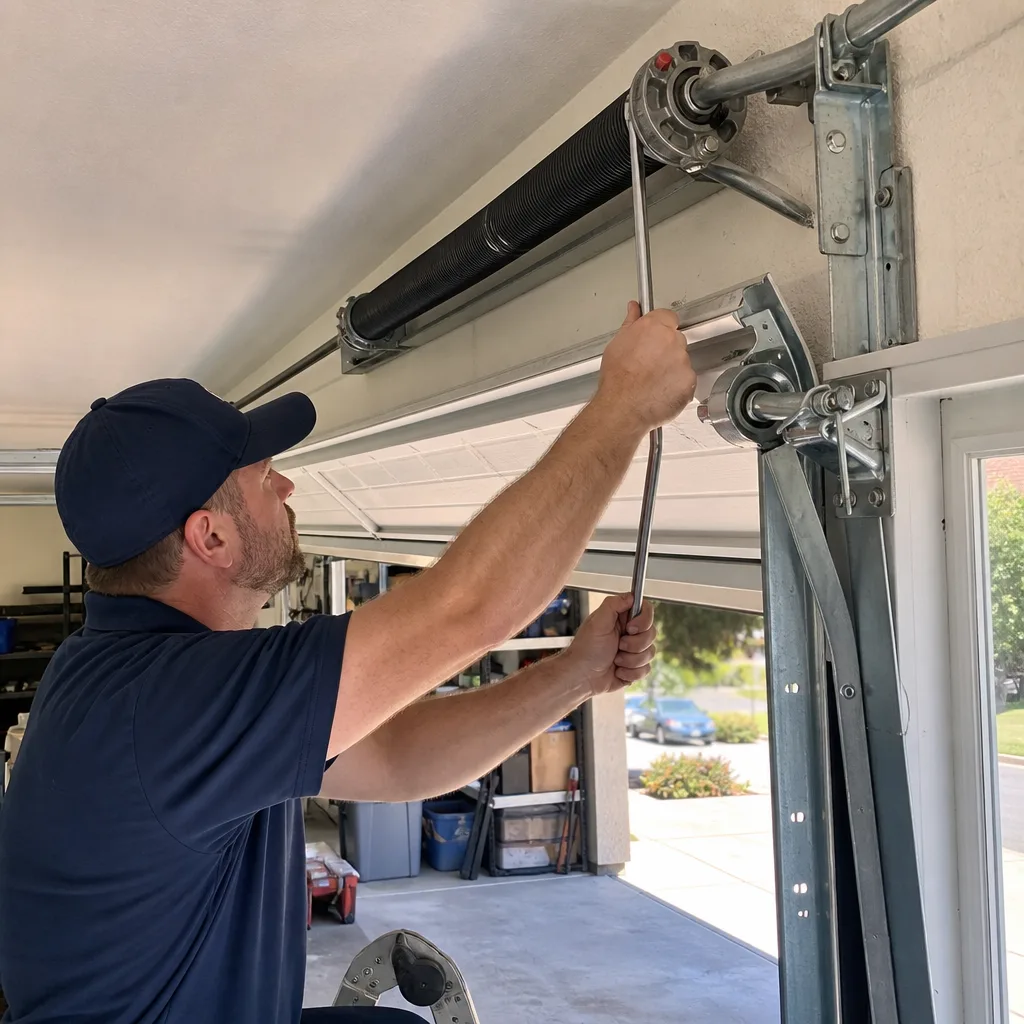
Some garage door work is genuinely dangerous. Torsion springs under tension hold enough energy to break bone or worse if they release wrong. Cables that snap under load become steel whips. We’re not going to give you a step-by-step for winding a torsion spring because a real expert will tell you that’s the one job you don’t do yourself. Call a professional when a spring breaks, when a cable is frayed or snapped, when the door comes off its track, or when the opener won’t reverse on resistance. If your door is making a grinding noise that wasn’t there last month, don’t wait until it fails completely. Otto’s Garage Door offers free estimates in Valley Center, call (760) 906-8603, and a live person answers. Otto will tell you over the phone whether it’s safe to operate the door until we get there.
Frequently Asked Questions
Expect $1,700 to $4,200 for a complete replacement, including materials, labor, standard haul-away, and permit where required. The spread comes from door type, insulation level, opener replacement, and whether custom sizing applies. Call (760) 906-8603 for an exact quote on your door, estimates are free and the price you get is the price you pay.
Not with us. Otto quotes on the initial call using details you give him about the door size, type, and what’s wrong, and he holds that number when he arrives. The only thing that changes a quote is discovering a different problem than what was described, and even then, you approve any new number before work continues. No surprise invoices. That’s the 90-Day Done Right Promise in practice, and it’s written on every job in Valley Center.
In most cases, yes, especially for attached garages in unincorporated areas like Valley Center, where San Diego County is the permitting authority. Same-for-same repairs like springs and openers generally don’t need one. A full door replacement typically does. A reputable contractor pulls the permit and lists it on the estimate.
Yes. We answer the phone 24/7, including nine at night when a spring lets go and your vehicle is sealed inside the garage. For emergency spring replacements, we carry the common torsion and extension spring sizes on the truck so the fix is usually same-day. Call (760) 906-8603 and a live person picks up.
About half the difference is insulation and panel construction. The rest is spring quality, opener integration, warranty length, and finish durability. The $4,000 door typically outlasts the $2,000 door by five to eight years in Valley Center’s sun and needs fewer repairs along the way. The cheaper door isn’t wrong, but the math isn’t just the sticker price.
We carry the most commonly used springs, cables, rollers, sensors, and openers on our trucks because Valley Center isn’t a five-minute drive from a parts counter. For full door replacements, we keep standard residential sizes in local stock. Custom sizes and specialty finishes are ordered, and the lead time is on the quote before you sign anything.
Because the job costs more to do here. Drive time eats a bigger slice of the day, the old door rides farther to the disposal facility, and county permits add a line item that city jobs process differently. Honest companies price those factors into the bid instead of hiding them in the door markup. A bid that matches a San Diego city price for the same work in Valley Center usually means something is being left out.
The Bottom Line
A garage door in Valley Center costs what it costs because of where you live: hot summers, real drive times, county permits, and a door that has to survive direct sun and Santa Ana winds without calling for service twice a year. The right way to buy is to compare bids line by line, ask about spring cycle ratings and haul-away, and pick a company whose name you can verify and whose truck you’ll see again at the feed store. Otto’s Garage Door has been in this county since 2004, owned and operated by Otto Reinhardt, with a 90-Day Done Right Promise written on every invoice and a phone number that rings to a real person, 24/7. Call (760) 906-8603 for a free estimate on any garage door job in Valley Center, and you’ll get an honest number you can hold us to.
Written by Otto Reinhardt, Owner at Otto’s Garage Door, serving Valley Center since 2004.