
Last updated September 10, 2026
Full 25-point door and opener safety check with every visit - springs, cables, rollers, tracks, and your LiftMaster or Chamberlain opener included
You get a price before we start. It does not change when the truck arrives.

 Before
 After
After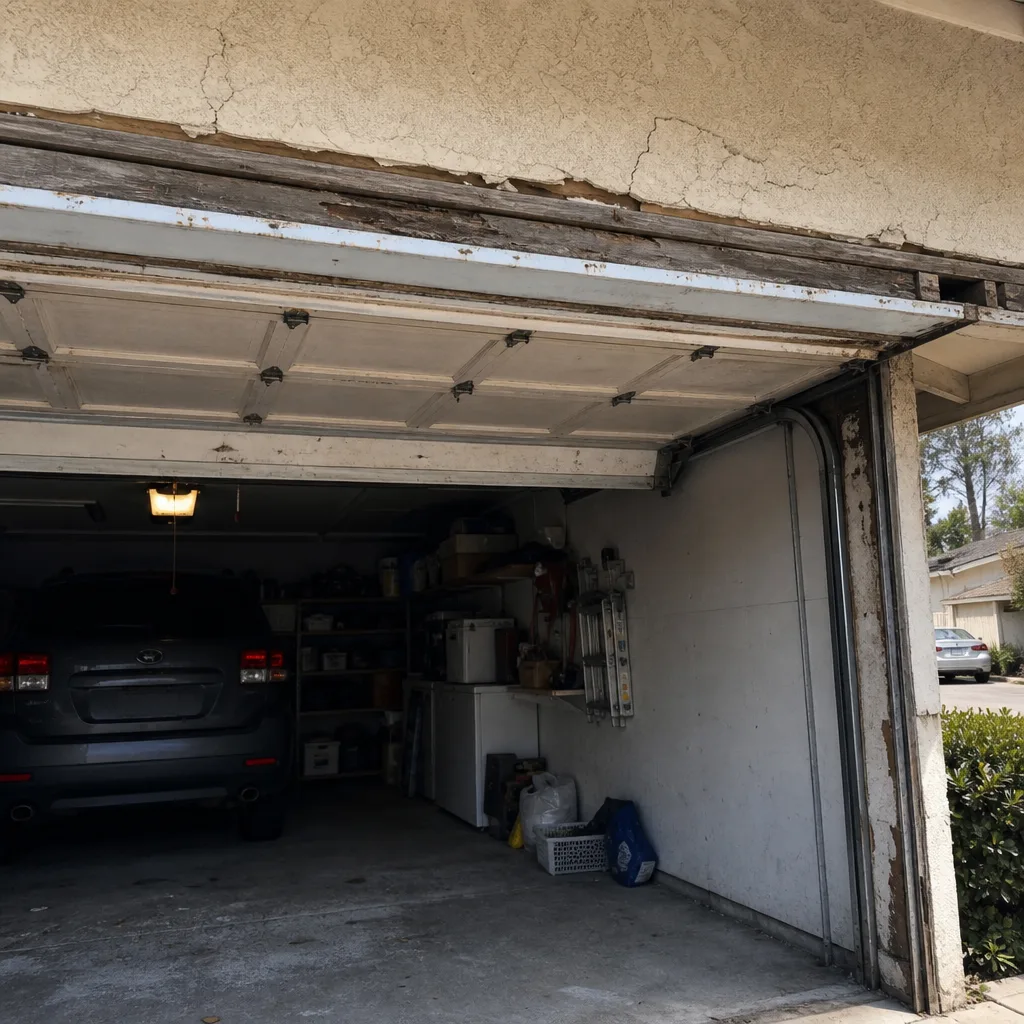 Before
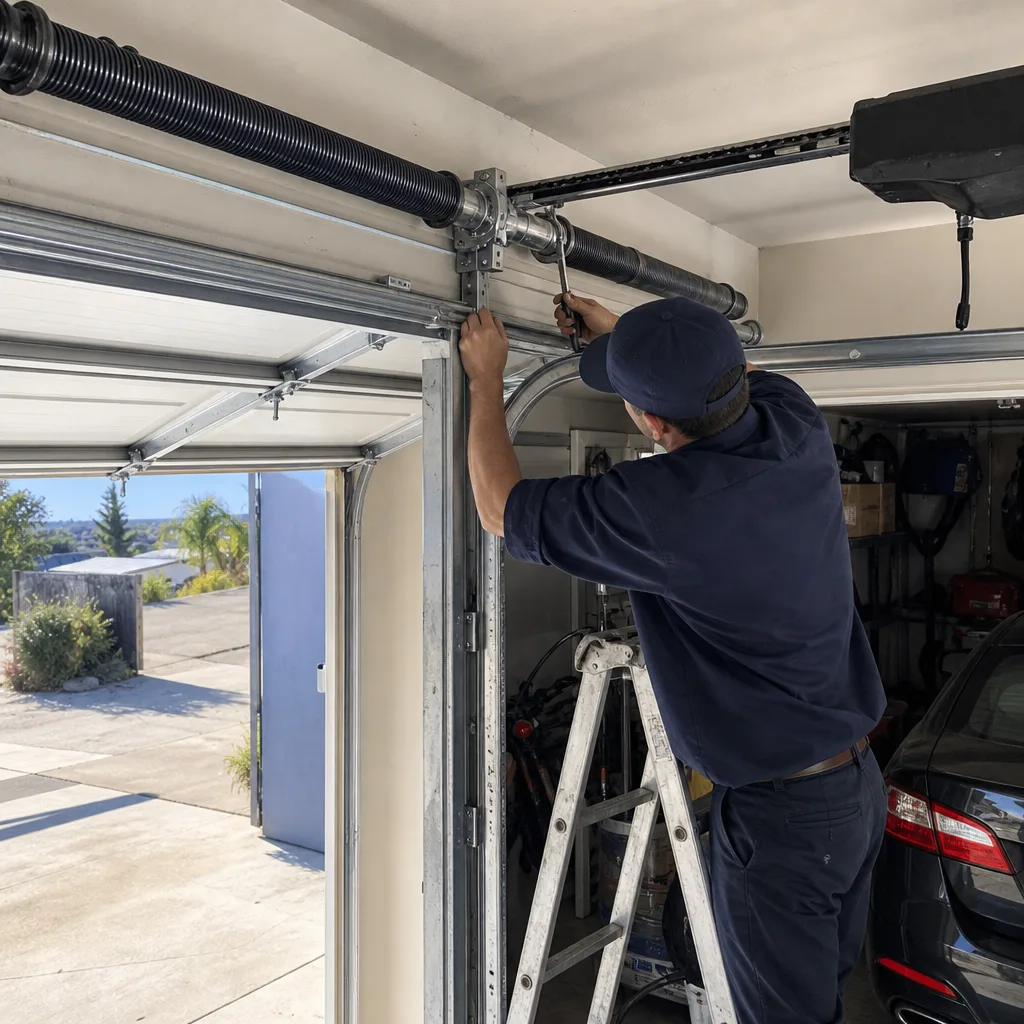 After
After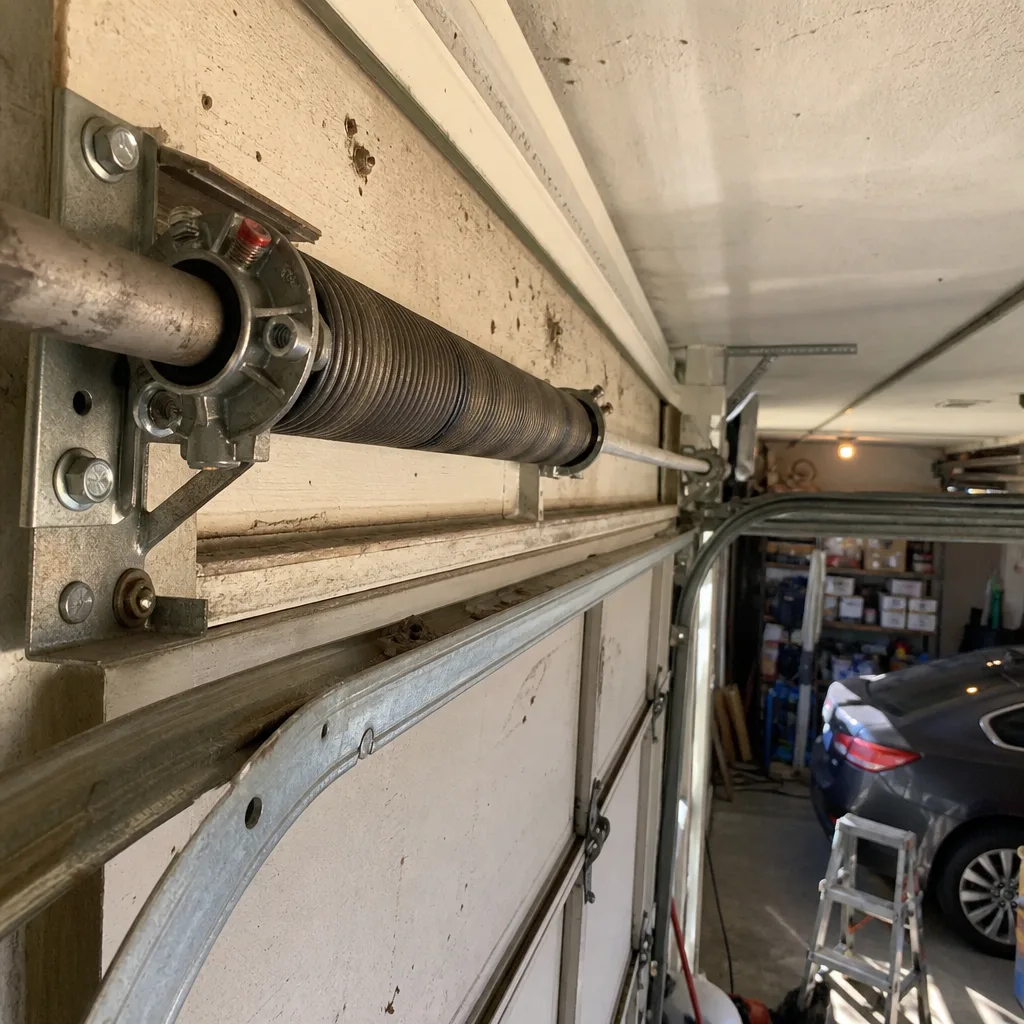 Before
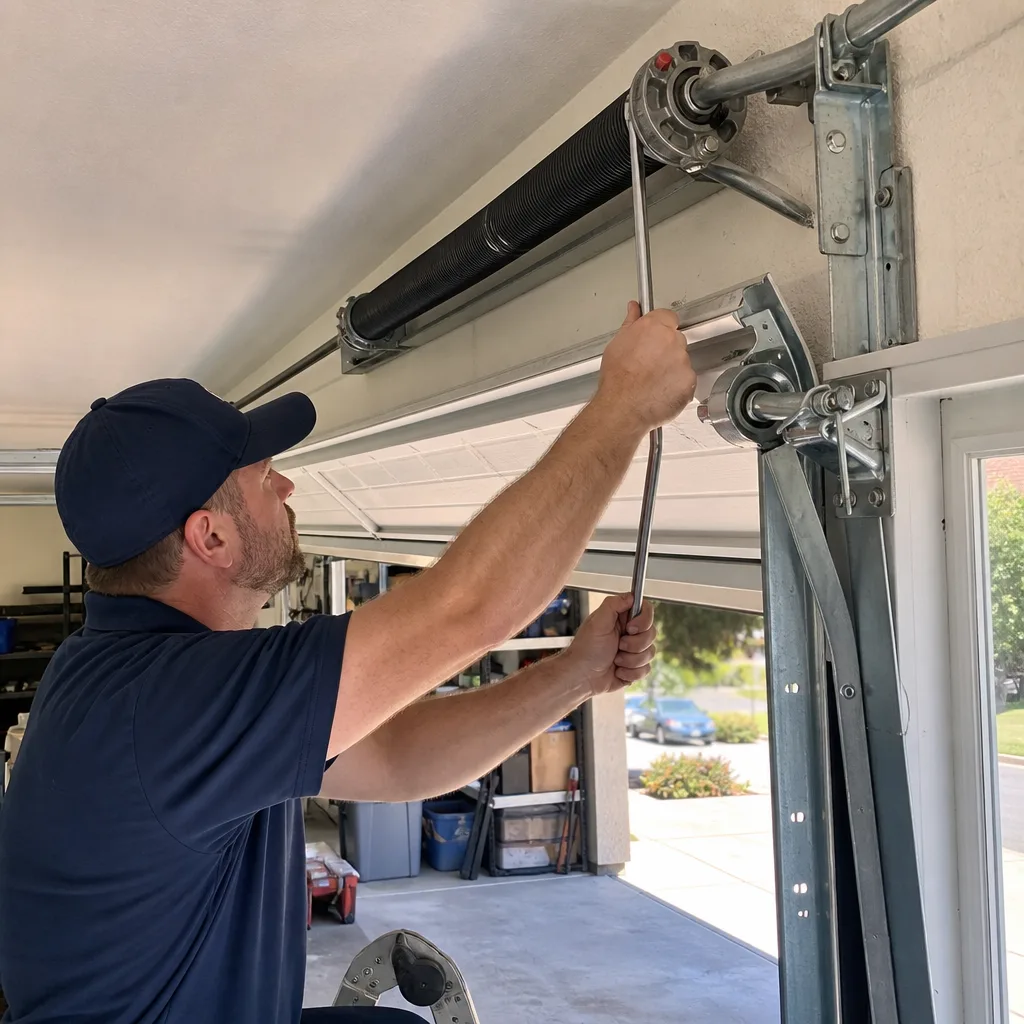 After
AfterSeasonal Garage Door Care for Valley Center: Year-Round Homeowner’s Guide
People move to Valley Center from the coast expecting San Diego weather and get surprised by 108-degree Julys, January nights below freezing, and Santa Ana winds that pack dust into every moving part. Your garage door feels all of it. This guide maps the actual weather calendar of Valley Center to the specific maintenance tasks that keep your door running without a service call, and for a deeper dive, see The Complete Guide to Garage Door in Valley Center. We’ve been repairing doors in Valley Center since 2004, and we can tell you exactly what each season does to torsion springs, cables, rollers, and opener motors.
Quick Answer
Seasonal garage door care in Valley Center comes down to four tasks: cleaning the track and bottom seal when Santa Ana winds drop debris, swapping to a low-temperature lubricant before January freezes, tightening and checking spring tension before July heat arrives, and inspecting cables for fray after winter temperature cycling. Fifteen minutes of seasonal attention prevents most of the repairs we get called for, and the two tasks homeowners skip most are the ones that cause the most expensive failures.
Table of Contents
- Summer: Heat, Spring Tension, and Thermal Cutoffs
- Fall and Santa Ana Season: Wind-Debris Clear-Out
- Winter: Cold-Weather Lubrication and Cable Checks
- Spring: Post-Winter Inspection Focus Points
- Year-Round UV Load on Valley Center Doors
- A Simple Seasonal Maintenance Schedule
- Common Mistakes to Avoid
- When to Call a Professional
- Frequently Asked Questions
Summer: Heat, Spring Tension, and Thermal Cutoffs
Valley Center regularly hits 100 degrees and above from July through September. The coastal marine layer that keeps Escondido and Vista mild does not climb the grade. Your garage door sits in that heat all afternoon, and the metal does what metal does: it expands. A standard steel door panel can gain a fraction of an inch across a 16-foot span in summer heat. That expansion changes how the door sits in the track, and it changes how the torsion springs behave.
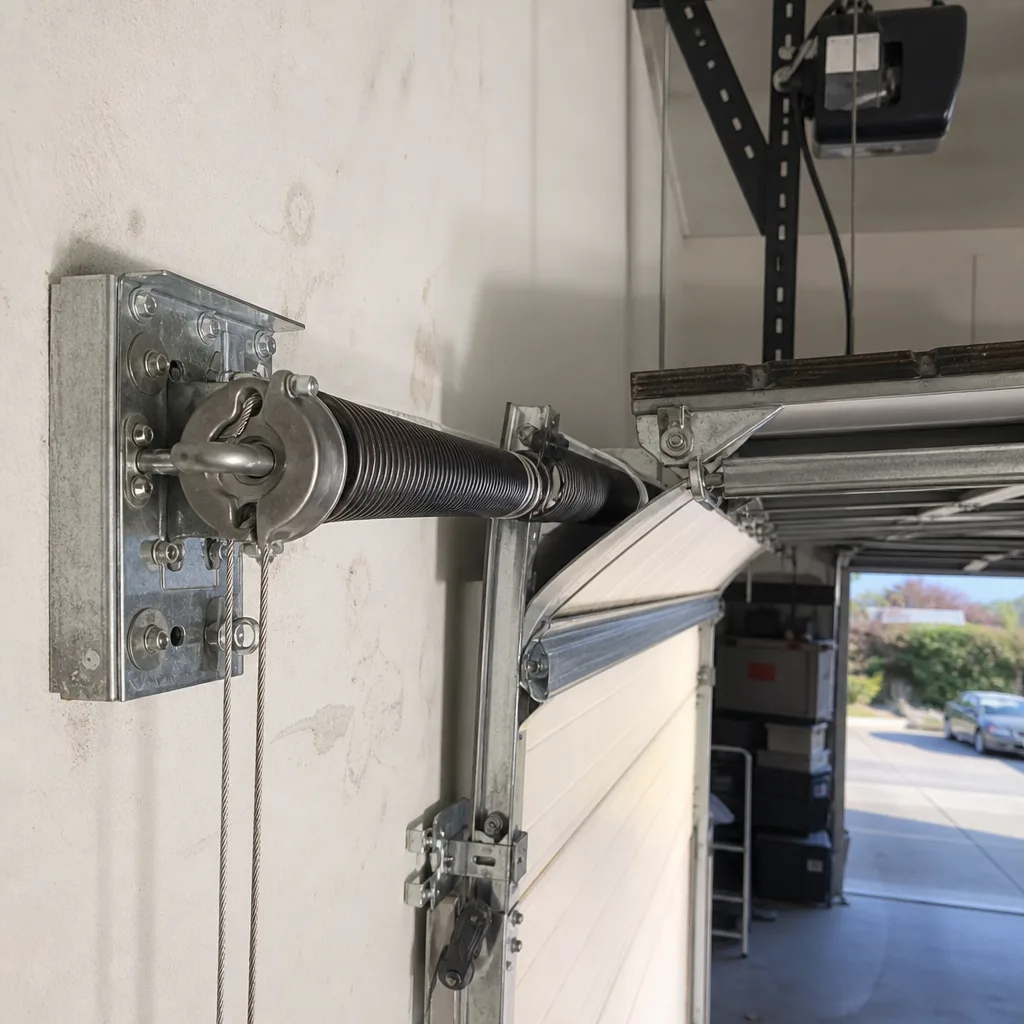
Torsion springs are rated by cycle life and wound to a specific tension. Heat does not make springs weaker, but it does make the steel in the spring marginally less stiff, and when combined with expanded panels, the door can start to feel heavier partway up. The opener compensates until it cannot. The most common summer failure we see in Valley Center is not a broken spring. It is a thermal cutoff trip on the opener motor.
When the opener strain climbs because panel expansion creates resistance, the motor runs hotter. The internal thermal cutoff senses that heat and shuts the opener down mid-cycle. Homeowners think the opener is dead or the spring broke. Often the truth is simpler: the door needs its summer tune-up, and the opener was working harder than it should have been.
What to check before July heat peaks:
- Check the door balance by hand. Pull the red release cord and lift the door to waist height. It should stay put. If it drifts down or wants to fly up, spring tension needs adjustment. Do not attempt that adjustment yourself. Torsion springs hold enough stored energy to kill. Call a professional.
- Watch the door move through a full cycle. Listen for grinding or catching. Look for a panel that hesitates at one point in the track. That hesitation is expansion-related friction and it gets worse as temperatures climb.
- Feel the opener motor housing after two cycles. If it is too hot to keep your hand on comfortably, the opener is working against something. That heat is the thermal cutoff warning before the cutoff actually trips.
- Clean the track channel. A couple of minutes with a rag removes grime that adds friction and amplifies every heat-related clearance problem.
Summer in Valley Center is also wildfire season. If you evacuate or simply lose power during a Public Safety Power Shutoff, remember that every opener has a manual release. Know where the red cord is. If the door is heavy when you pull it, the spring is not doing its job and you are lifting 200 pounds of steel yourself. That is a sign the spring is near the end of its life.
Most garage door openers from LiftMaster and Chamberlain have thermal protection built in, and older Craftsman units do too. The cutoff is doing its job. The fix is not bypassing it. The fix is removing the resistance that made the motor overheat. A properly balanced door should let a healthy opener run one full cycle without getting more than warm.
Fall and Santa Ana Season: Wind-Debris Clear-Out
October through December brings Santa Ana winds to Valley Center. The wind does not gently blow. It channels through the canyons and across open hillsides at 40 to 60 miles per hour, carrying dust, dry grass, oak leaves, and grit from every unpaved driveway on your street. All of it ends up in the lowest point of your garage door system: the bottom seal and the vertical track channels.
The bottom seal, also called the astragal, is the rubber strip along the bottom edge of the door. It is supposed to keep water, dust, and pests out. After a Santa Ana event, we find seals packed with a half inch of wind-driven debris. The seal compresses against the concrete, loses its shape, and then daylight starts showing under the door. Rodents find that gap fast. In our experience, rat and gopher issues in Valley Center garages spike in late fall because a damaged bottom seal gave them a clean entry point.
Here is the five-minute clear-out we recommend after every major wind event:
- Close the door fully. Look along the bottom from inside the garage with the door closed. If you see daylight, debris is holding the seal up or the seal has deformed.
- Sweep the concrete where the door lands. A small mound of dirt there gets pressed into the seal every time the door closes. Clean the landing area first.
- Run your hand along the bottom seal outside. Brush out packed debris using a stiff brush or an old toothbrush. Check for tears or channels worn into the rubber.
- Open the door and inspect the vertical track channels. Wind pressure can push small stones and twigs into the track. Rollers will crunch over them and eventually bind.
- Test the door. Run one full open-close cycle and listen. A quiet door after a wind event means the track is clear.
Santa Ana winds also carry fine dust that works into hinges, bearings, and lock mechanisms. Dust mixed with old grease creates a grinding paste that accelerates roller wear. A quick blast with compressed air or a wipe-down of the hinge points after a heavy wind week slows that process considerably.
One more wind-specific issue: unlatched single-car doors. A strong gust can rattle the door hard enough to jolt the top section out of the track if the door has play in it. If your door shakes audibly during Santa Ana gusts, it has excessive play somewhere. That play is a track or roller issue worth looking at before the next big wind event makes it worse.
Winter: Cold-Weather Lubrication and Cable Checks
Valley Center nights drop below freezing in December and January, sometimes into the mid-20s. That is cold enough to change how garage door lubricants behave. Standard white lithium grease thickens in cold weather. Silicone sprays do not perform well either once temperatures dip below 40 degrees. The result is a door that moves sluggishly on cold mornings and an opener that labors through the first cycle of the day.
The lubricant swap that actually works for Valley Center winters is a low-temperature-rated synthetic garage door lubricant. These products stay fluid down to minus 20 degrees or lower. Apply them to the torsion spring, the hinge points, the roller bearings (not the nylon wheel surface itself), and the opener rail. Do this in late November or early December, before the first hard frost.
The cold also does something to cables that most homeowners never notice until it is too late. Temperature cycling – the expansion and contraction from cold nights to warm afternoons – stresses the steel strands in your lift cables. A cable that was close to failure in October will often let go in January. The cable holds spring energy. When it releases, the door can drop catastrophically.
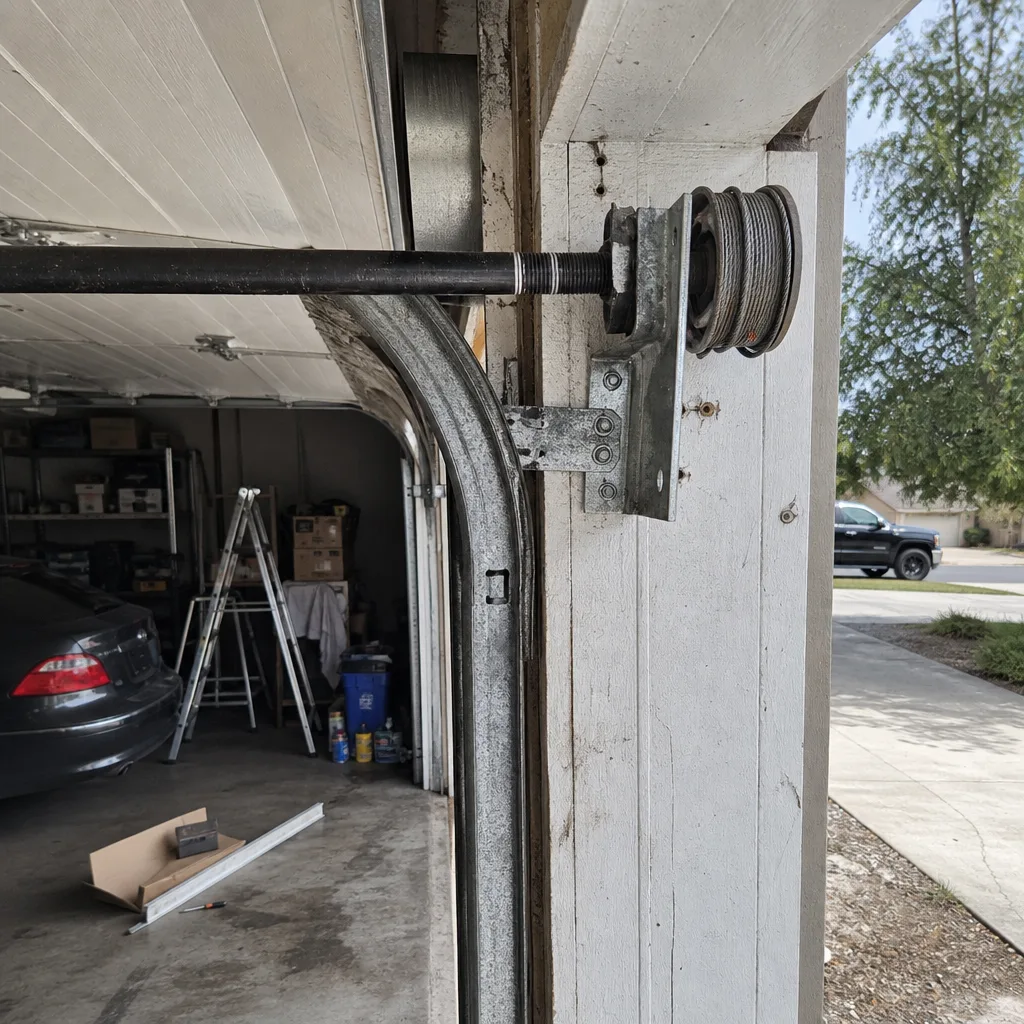
We tell every Valley Center homeowner the same thing before winter: run your fingers along the full length of both lift cables with the door closed. You are feeling for:
- Frayed strands that catch on your skin
- Flat spots or kinks in the cable path
- Rust or discoloration at the bottom cable anchor
- A gap between the cable and the drum on either side
If you find any of these, stop using the door and call a professional before you get a spring-release failure. A frayed cable is a $45 part and an hour of labor. A dropped door section is a bent panel, a broken window, or worse, a person underneath it. The cost difference runs into the hundreds, and the safety difference does not have a price.
Winter in Valley Center is also the season when power outages hit harder than any other. Heavy rain, wind, and occasionally even frost can interrupt service. If you have a Chamberlain or LiftMaster opener with battery backup, test that battery in November. Most backup batteries last three to five years. The test takes thirty seconds: unplug the opener and run the door. If it will not move, the battery is dead and you will be locked out exactly when the power goes.
Spring: Post-Winter Inspection Focus Points
The mistake most Valley Center homeowners make in spring is treating garage door maintenance as a once-a-year afterthought. The people who had a door fail in winter learned their lesson. Everyone else assumes the door survived winter fine and moves on. Then July hits, the door binds in the heat, and the spring job that would have been caught in March is now an emergency in the middle of summer.
Spring inspection should focus on the components that winter punished hardest:
- Lift cables. Temperature cycling is hardest on cables. Inspect them again even if you checked in December. The spring thaw and warming pattern stress the strands differently than the initial cold snap.
- Bottom seal. Winter rain saturates the concrete, and the seal absorbs some of that. Look for cracking or stiffening. A hardened seal will not conform to the floor and will not keep pests out come summer.
- Hinges and brackets. Cold makes metal brittle. A hinge that was stressed in cold weather may show a hairline crack in spring. Look at the centers, not just the edges.
- Torsion spring condition. Spring is the best time to count remaining cycles or observe obvious wear. A spring with visible rust pitting or one that has stretched out of its original shape is on borrowed time. We count spring cycles the way you count tire miles. We will tell you what is left on yours.
- Opener force settings. After a winter of cold starts and stiff lubricant, the opener may have learned to push harder. Running the door through a full cycle and listening for strain lets you identify an opener that is working against resistance that is no longer there.
Spring is also the right season for a professional inspection if you have not had one in over a year. The inspection should take about an hour and should include the torsion system, cable and drum assembly, all hardware, roller condition, track alignment, and the opener’s force and limit settings. A garage door inspection is the cheapest insurance you can buy against a mid-summer spring failure.
Year-Round UV Load on Valley Center Doors
Valley Center sits at about 1,300 feet of elevation and gets more UV exposure than coastal areas of San Diego County. The same sun that makes Valley Center great for avocados also breaks down paint, weatherstripping, and wood panel moisture barriers on garage doors. South-facing and west-facing doors take a beating that north-facing doors do not. If your door faces the afternoon sun, the paint on it ages twice as fast as the same door facing north.
What UV does to a garage door:
- Fades and chalks paint. Dark colors show fading first, especially burgundy, dark green, and brown. Chalking is the powdery residue that rubs off on your hand. It means the paint binder is breaking down and the metal underneath is losing its protection.
- Hardens and cracks weatherstripping. The rubber or vinyl stops around the door and the bottom seal lose plasticizers under UV exposure. They shrink, crack, and stop sealing. We replace weatherstripping on Valley Center doors almost every year because the sun simply bakes it.
- Warps wood doors. If you have a wood garage door in Valley Center, UV exposure dries the wood unevenly. The paint or stain on the sunny side breaks down, moisture gets in, and the panel starts to warp or delaminate. Wood doors need resealing every two to three years in this climate.
- Breaks down fiberglass doors. Fiberglass panels can yellow and become brittle under sustained UV. Once the gel coat is compromised, the panel is vulnerable to impact damage.
The practical fix for UV damage does not require replacing the door. Repainting a steel door with a UV-resistant exterior paint every five to seven years, replacing weatherstripping every two to three years, and resealing wood doors on the same schedule does the job. If you have a Wayne Dalton wood door or a Raynor steel door, the manufacturer’s care guidance still applies, but Valley Center’s UV load means you will reach those intervals faster than someone in Carlsbad will.
One specific recommendation for Valley Center: choose lighter colors if you are replacing a west-facing door. A dark door on a west-facing wall can reach surface temperatures of 150 degrees in August. That heat transfers into the garage and into the door hardware. Lighter colors reflect more heat, keep the garage cooler, and extend the life of springs, cables, and seals.
A Simple Seasonal Maintenance Schedule
Here is the seasonal calendar we recommend for Valley Center homeowners. None of the tasks takes more than twenty minutes, and the whole schedule takes about two hours per year. That is less time than one wait for a repair truck.
- November (before first frost): Swap to low-temperature synthetic lubricant. Test opener battery backup if equipped. Inspect lift cables for fray.
- January (coldest month): Run the door manually once on a cold morning to check for sluggish movement. Listen for opener strain on the first cycle. Check bottom seal after rain events.
- March (after last frost): Full inspection: cables, springs, hinges, brackets, bottom seal, roller condition. Tighten any loose hardware you can reach safely.
- May (before heat): Check door balance by hand. Clean track channels. Lubricate hinges and springs if not done in March.
- October (before Santa Anas): Clean bottom seal and track channels. Check weatherstripping for UV hardening. Replace if cracked.
- After any major wind event: The five-minute clear-out described above.
If you do nothing else, do the cable inspection in January and the balance check in May. Those two tasks catch the failures that cause the most expensive and most dangerous problems in Valley Center.
Common Mistakes to Avoid
- Skipping the spring balance check in May. A door that starts laboring in spring becomes a thermal cutoff call in July. The balance check takes two minutes and tells you almost everything about the health of your torsion springs.
- Using WD-40 as a garage door lubricant. WD-40 is a solvent and a water displacer, not a lubricant. It strips the existing grease and leaves the metal drier than before. Use a proper garage door lubricant.
- Ignoring a frayed cable because “it still opens fine.” A frayed cable is a bomb with a timer. It will fail, and when it does, the door can drop hard. We see it every winter in Valley Center.
- Leaving the bottom seal packed with debris after Santa Ana winds. The debris creates gaps, the gaps let in rodents and water, and the rodents chew wiring and store food in your garage. Clean the seal after every wind event.
- Attempting to adjust torsion springs without training. A torsion spring holds enough energy to break bones or kill. No YouTube video makes it safe. This is the one job that always, always requires a professional.
- Forgetting the manual release cord location. During a power outage or an opener failure, knowing where the red cord is and how to use it is the difference between getting your car out and being trapped at home. Practice it once a year.
- Painting over cracked weatherstripping instead of replacing it. Paint does not restore flexibility. Cracked weatherstripping keeps cracking under the paint, and the seal keeps failing.
When to Call a Professional
Call a professional if you find a frayed cable, a visibly rusted or stretched torsion spring, a door that will not balance at waist height, a bent or binding track, or an opener that trips its thermal cutoff more than once. These are not weekend projects. They are safety hazards with heavy moving parts under stored spring energy. A door is 200 pounds riding on two springs. Respect it.
If you are in Valley Center and want a second set of eyes on any of these issues, we offer a free second opinion on any written estimate. Call (760) 906-8603 and a live person answers, often Otto himself. We will quote the job on the call and hold that number at the door.
Frequently Asked Questions
Twice a year is the right cadence for Valley Center: once in spring before the heat, and once in fall before the Santa Ana season and cold nights. A full professional inspection once a year, combined with the twice-yearly DIY checks, keeps most doors running for a decade or more without major repair.
Heat itself does not break springs, but it accelerates the strain on springs that are already weak. When panel expansion creates resistance in July and August, a spring with low cycle life left will fail sooner than it would in mild weather. The failures we see in summer are almost always on springs that were already near the end of their cycle rating. If your spring is pitted with rust or visibly stretched, have it replaced before summer heat arrives.
Yes, lubricating is a homeowner-safe task, provided you use the right product and avoid the spring cones where the stored energy lives. Use a low-temperature synthetic garage door lubricant on the spring coils, hinge pivot points, roller bearings, and opener rail. Apply sparingly and wipe off excess. Avoid the temptation to adjust anything while you are in there.
A professional lubrication and inspection visit typically runs $85 to $150 in the Valley Center market, depending on door size and condition; for full pricing context, see our Garage Door Cost Breakdown: The Valley Center Homeowner’s Reference for 2026. Replacing a bottom seal adds roughly $60 to $100 including the part. Replacing lift cables runs $120 to $180 per cable. Full spring replacement runs $180 to $340 depending on spring size and door weight. Every price is quoted and agreed before work starts, and the number does not change at the door. Call (760) 906-8603 for an exact quote. Estimates are always free.
The best cold-weather lubricant is a low-temperature synthetic garage door lubricant rated to minus 20 degrees or below. Brands like 3-IN-ONE and Blaster make good options. Avoid white lithium grease in winter, because it thickens below 40 degrees and makes the door sluggish on cold mornings. Apply in November and again in March.
Yes. Our trucks are stocked with parts for Wayne Dalton, Craftsman, Raynor, LiftMaster, and Chamberlain systems, along with Genie, Clopay, Amarr, and everything else common in Valley Center garages. If it is a common failure part, it is almost always in the truck on the first visit. If it is a specialty part, we order it and come back. Either way, the price is quoted before we start and does not change at the door.
The Bottom Line
Seasonal garage door care in Valley Center is not complicated, but it is specific. The heat in summer, the winds in fall, the freezes in winter, and the UV load all year each attack a different part of your door. The dangerous failures are the ones that happen without warning: a frayed cable that drops the door, a spring that lets go, a thermal cutoff that leaves you locked out. Thirty minutes of attention each season prevents most of those failures. If you do not have the time or the inclination, we do this for Valley Center homeowners every day, and you can find more guides & resources on our blog. Otto’s Garage Door is locally owned and operated since 2004, we answer the phone 24/7, and the name on the van is the same name on the invoice. Call (760) 906-8603 for a free estimate, a free second opinion, or a seasonal tune-up before the next Santa Ana blow.
Written by Otto Reinhardt, Owner at Otto’s Garage Door, serving Valley Center since 2004.